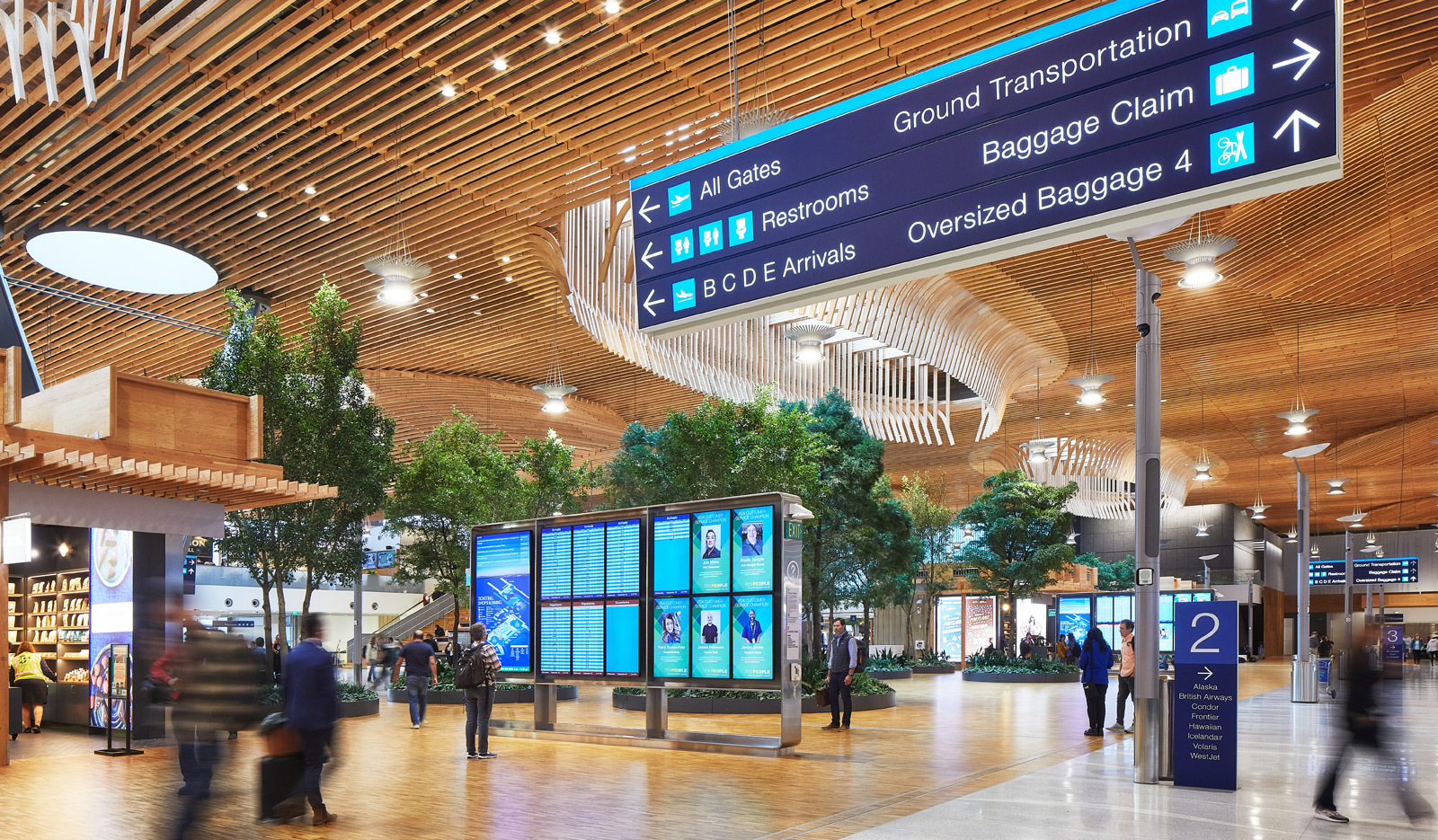
Folks in the region have long had a special relationship with our airport, and the love goes way deeper than the retro carpet (which, in case you missed it, is back in these areas). So when PDX needed an upgrade to welcome travelers for the next 50 years, the Port of Portland knew we had to do right by the airport’s biggest fans.
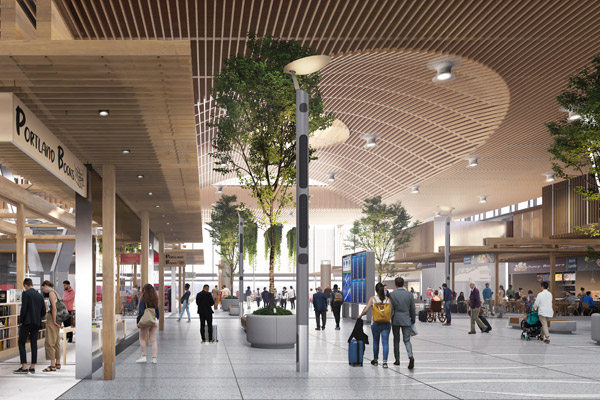
The first look came in August 2024, when the new spaces opened with that curvy wooden roof, new check-in stations, streamlined security, and local shops and restaurants surrounded by nature and art inspired by the Pacific Northwest.
In June 2026, we’ll conclude the final phase of the new terminal, completing Oregon’s largest infrastructure project.
Now you can experience these spaces exactly as they were designed from the start. Here’s what’s new, what that means for your next trip, and why showing up early has never been so rewarding. (What other airport has a not-so-secret speakeasy, anyway?)
1. Getting around just got a lot faster
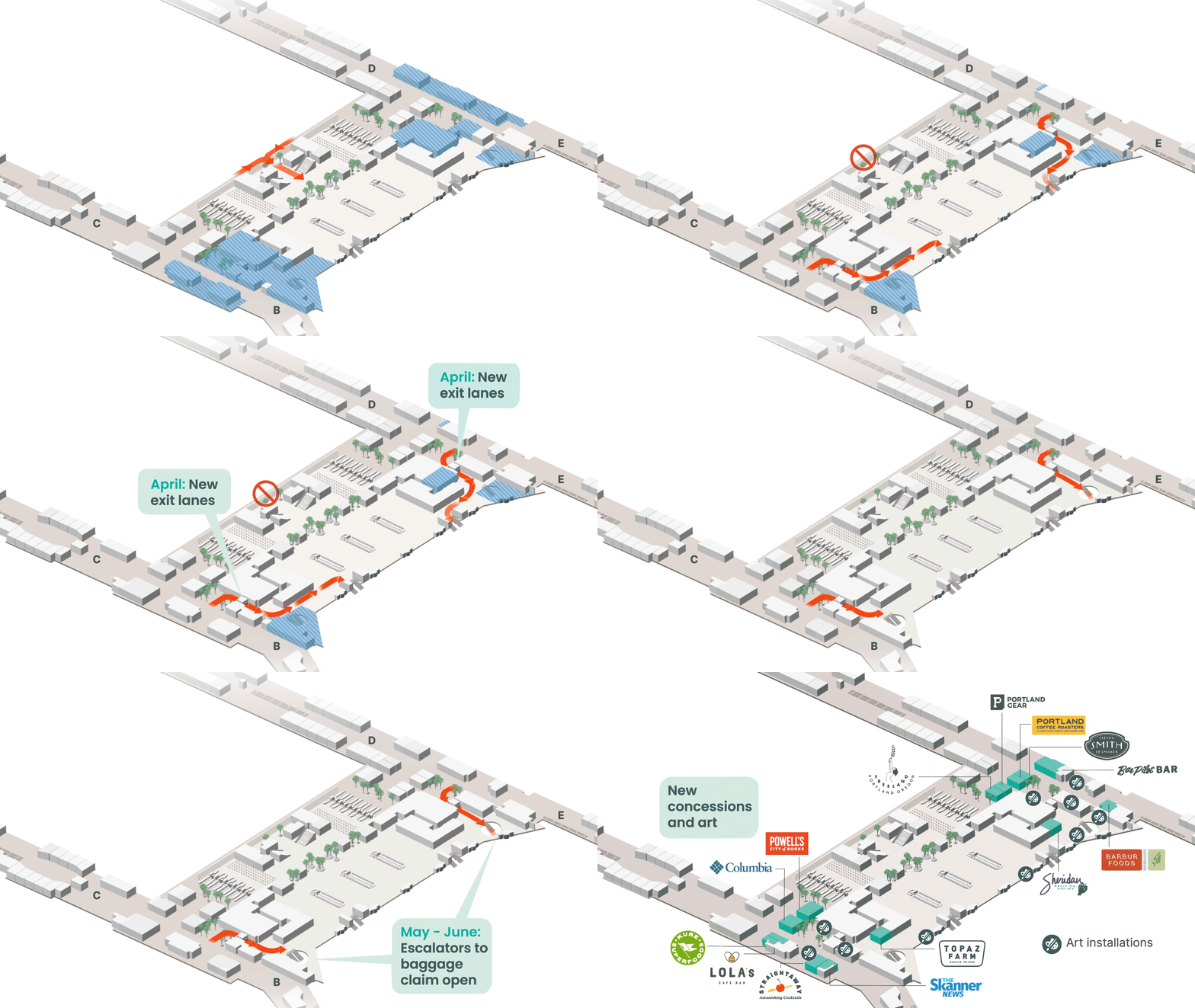
Remember those long detours to Concourses B and E during the last few years of construction? We do too, and we’re happy to report they’re gone for good.
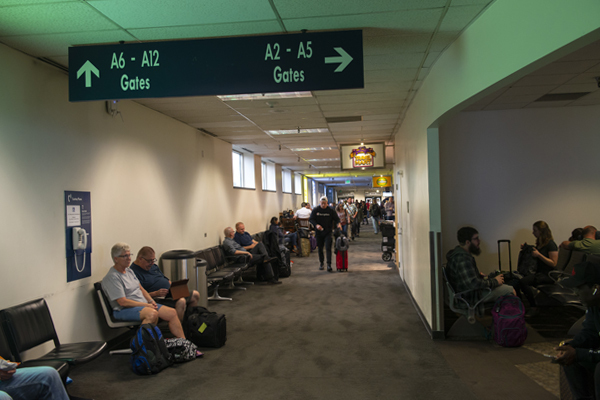
Direct routes are now open through the full terminal for the first time, which means the airport finally connects the way it was always designed to: end to end, with simpler wayfinding and less time between the ticket lobby and your gate. That means the passenger flow just, well, flows better.
TIP: Need some assistance? Visit our accessibility hub for support and resources. Or just getting your bearings? Our interactive map will point you in the right direction.
2. A shorter path from gate to baggage claim
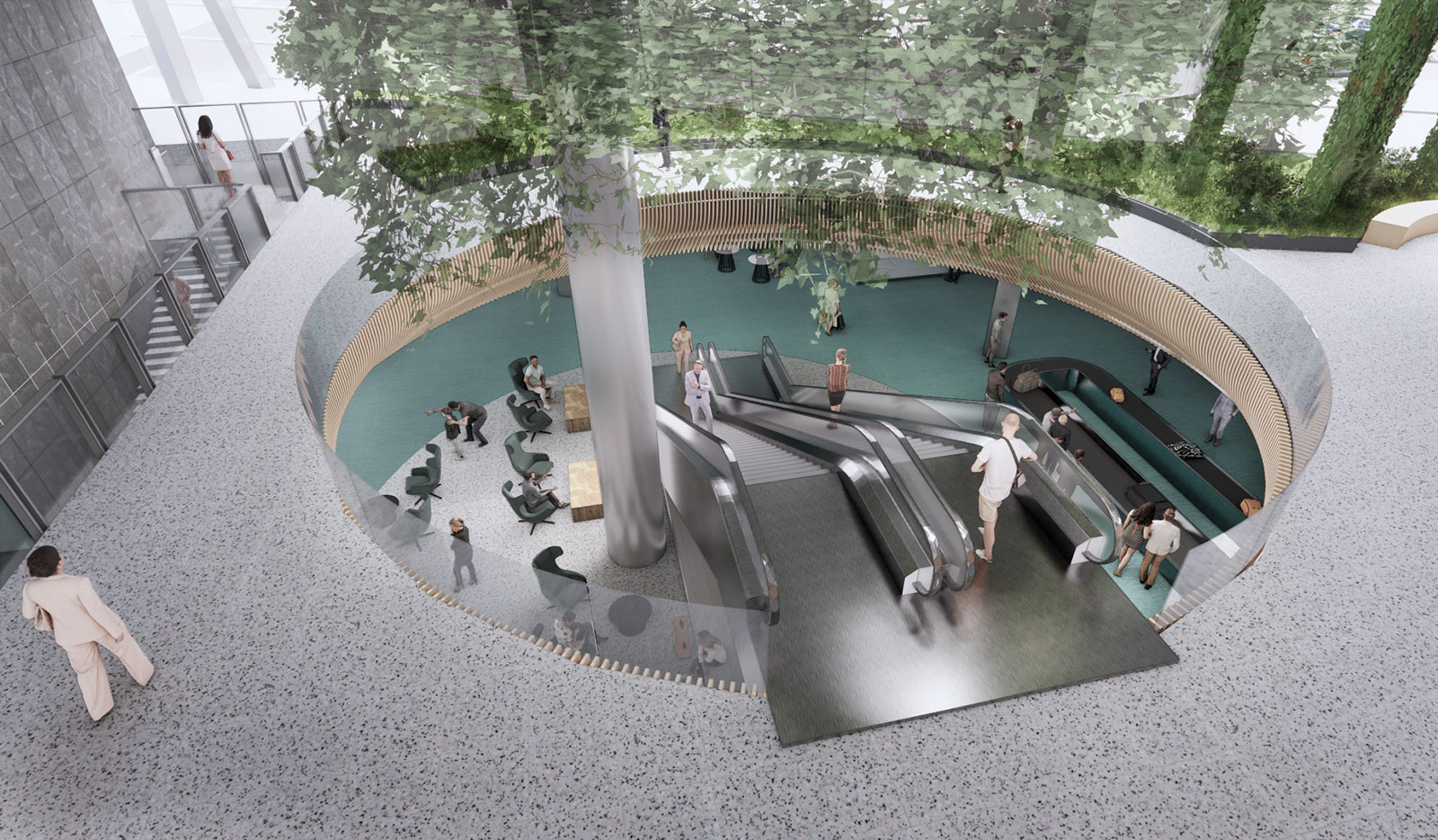
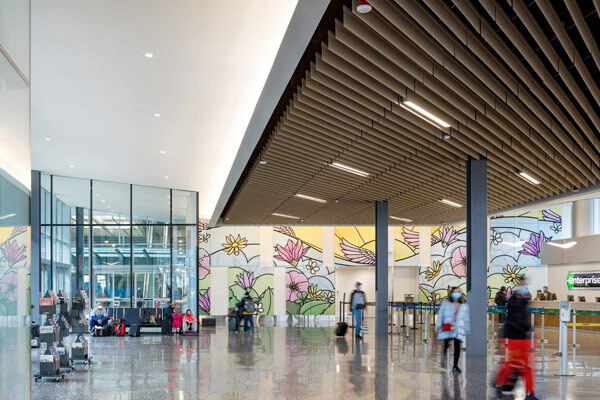
Two new permanent exit lanes on the north and south ends of the terminal are replacing the temporary route through the concourse connector. The new route means a shorter, more direct path from your gate into the main terminal and down to baggage claim. And you’ll be welcomed into new meeter/greeter areas, spaces designed to be an easy meeting spot for you and your loved ones (yes, with the retro PDX carpet underfoot for your shoe selfie needs).
TIP: While the main terminal is shiny and new, the baggage claim area is still mid-glow up. To ensure a smooth reunion with your checked luggage, landing passengers should watch for signs to baggage claim, showing you where to go. As always, triple-check your flight’s bag carousel number.
3. The local food and shop lineup keeps growing
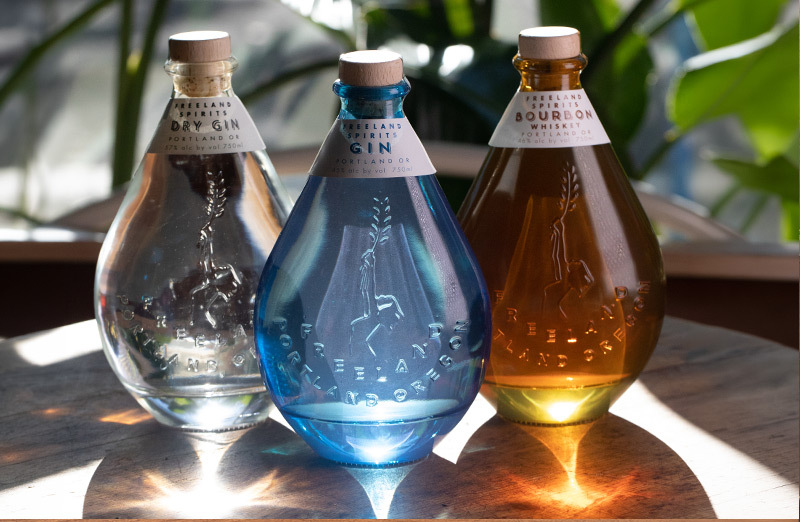

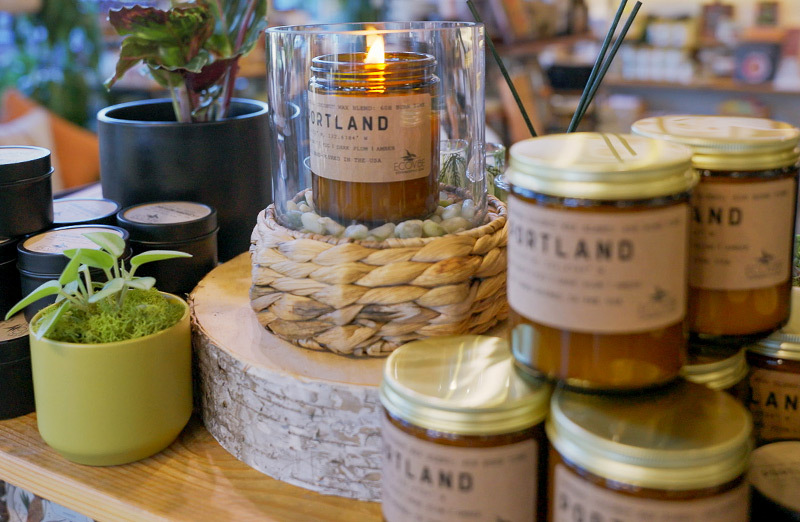
Twenty new shops and restaurants are opening throughout 2026, and every single one is a regional brand. Yes, Powell’s Books is coming back. Columbia Sportswear returns. Freeland Spirits and Steven Smith Teamaker bring Oregon’s craft beverage scene into the terminal with new spaces, and two fresh pop-ups arrived this spring (ECOVIBE and Mikiko Mochi Donuts) for a one- year residency.
TIP: These new openings are just the start of the beloved brands at PDX. Check out the full list of restaurants and shops we have at PDX including local favorites near your gate.
4. New reasons to slow down before security
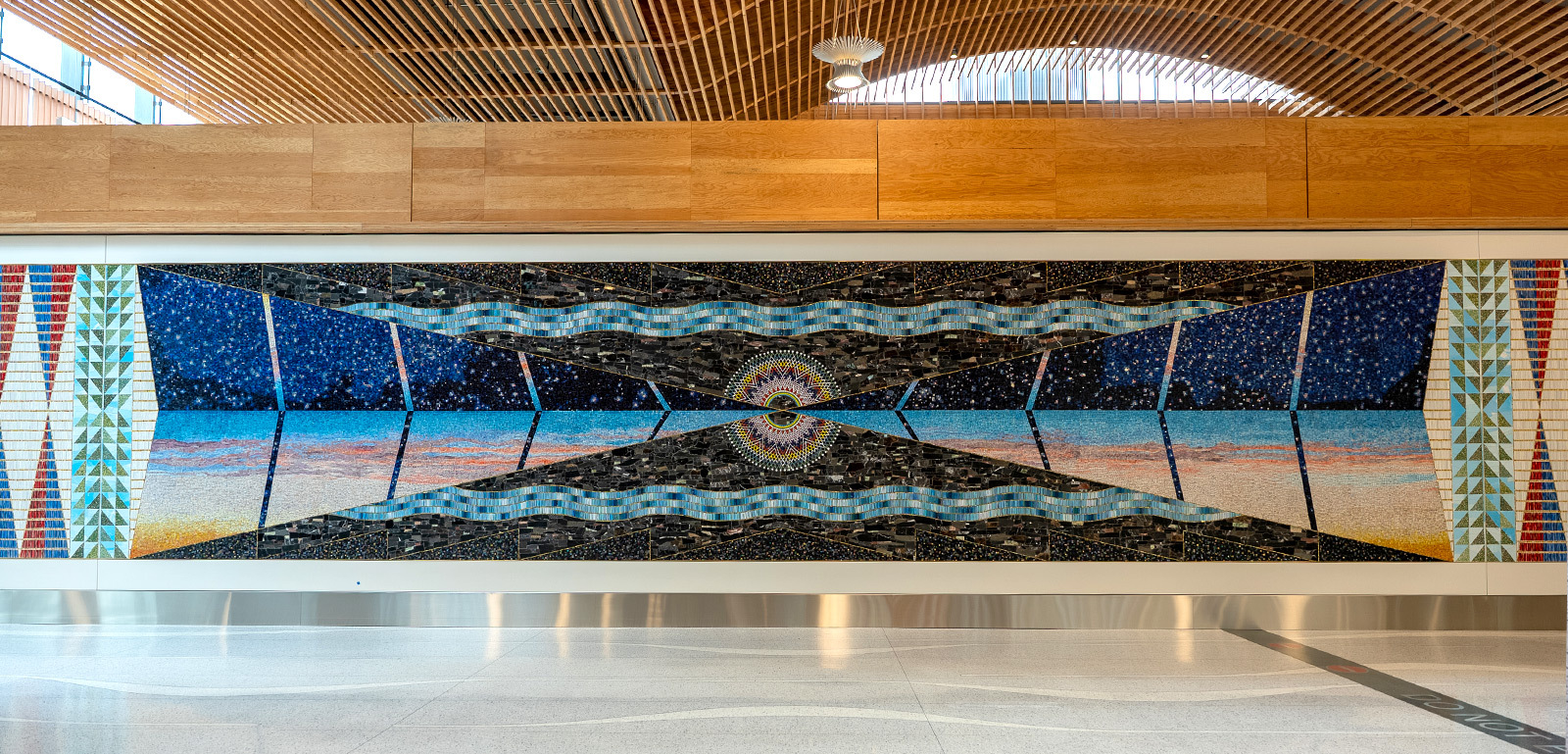
A lot of airports treat the pre-security area as an afterthought, a hallway you rush through. At PDX, we made it a destination. A few locals have even started stopping at PDX now and then to enjoy the tap room with views, the art gallery, and a speakeasy tucked inside Loyal Legion.
The spaces before you reach security are also filling up with new art, including large-scale sculptures by Indigenous artists welcoming you into PDX, ceramic and glass tile walls by Dyani White Hawk and Kate Newby and the return of a storied Louis Bunce painting to its permanent home. Most of the new art is in the pre-security areas, which is reason enough to budget a few extra minutes before you head to your gate.
TIP: Feeling a little anxious about how much time you’ve got? Our homepage has estimated wait times for security as well as flight information, so you can squeeze out a few more moments pre-security looking at art or sending a postcard directly from Paper Epiphanies.
5. More than 150 locals are featured in two big murals
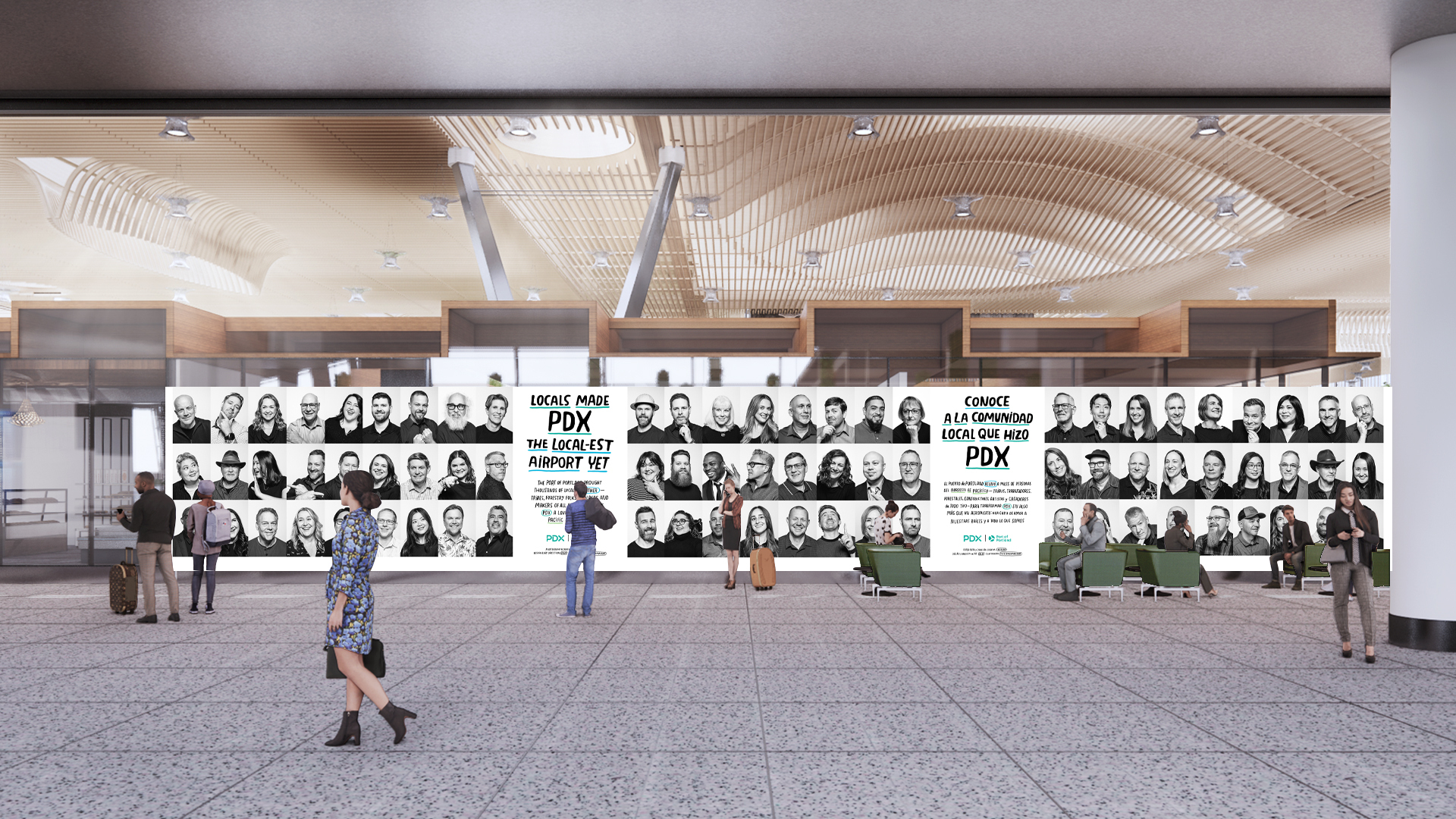
When you arrive, you’ll be greeted by the smiling faces of some of the locals who made this place. New community murals in the welcome areas feature more than 150 people who helped. That’s architects and electricians, tribal forestry partners and tile makers, and the kind of range that reflects the region-wide collaboration it took to locally source an airport from scratch.
TIP: Want to learn more about the bigger story of how 30,000 locals made PDX the local-est airport yet? Check out the behind-the-scenes story. You’ll appreciate just how much local pride it took to build when you meet these makers.
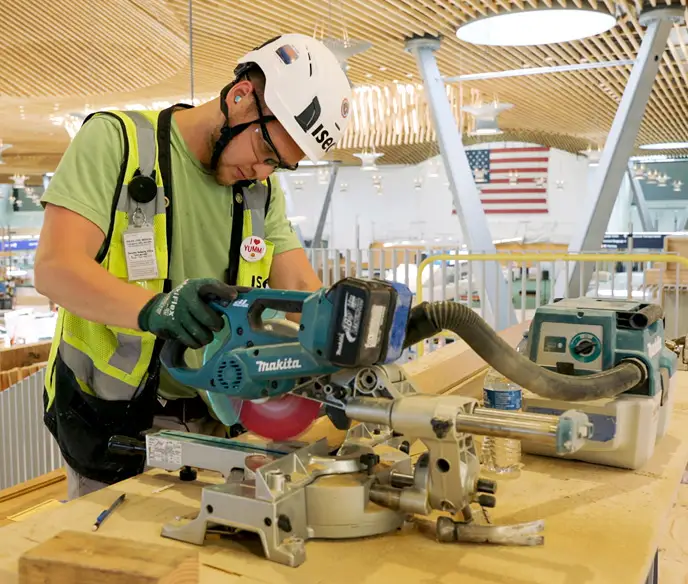

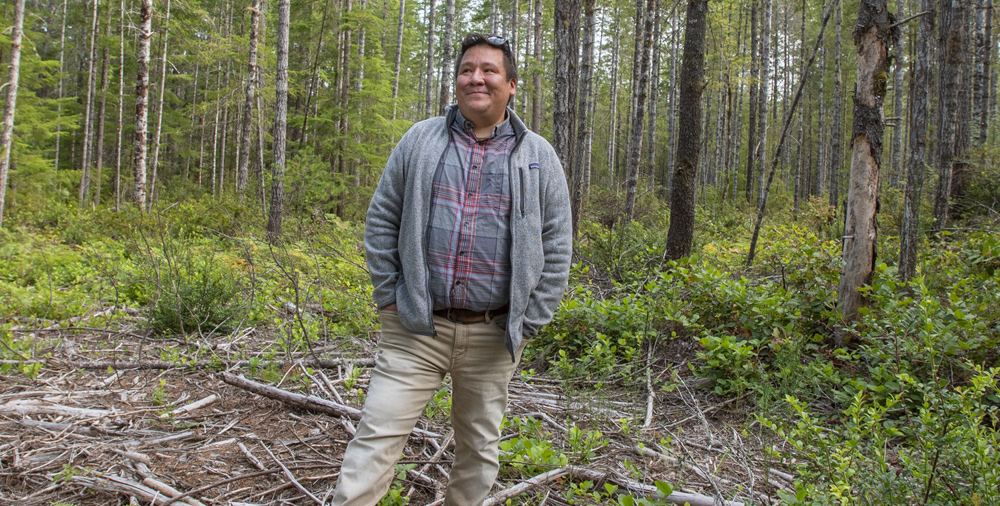
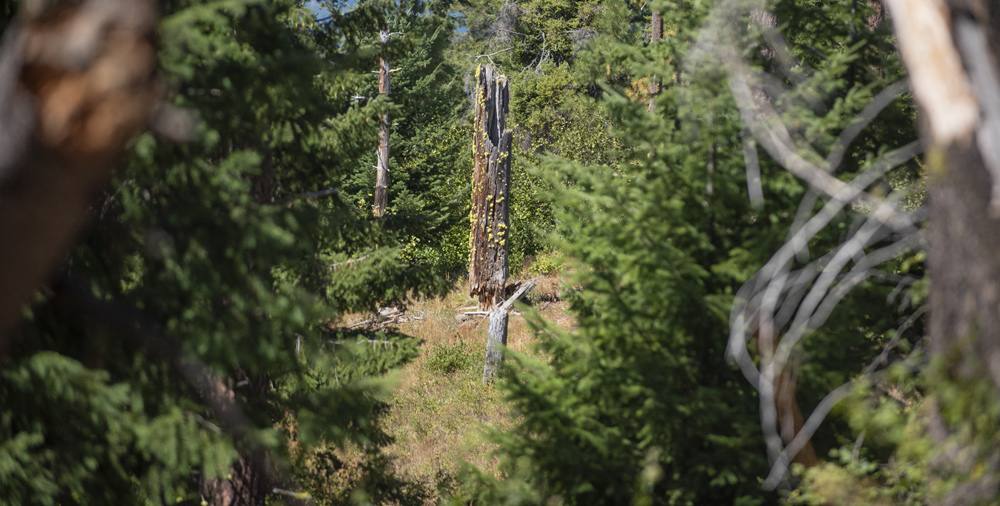
Tom Strong - Chief Executive Officer, Skokomish Indian Tribe, Skokomish Washington
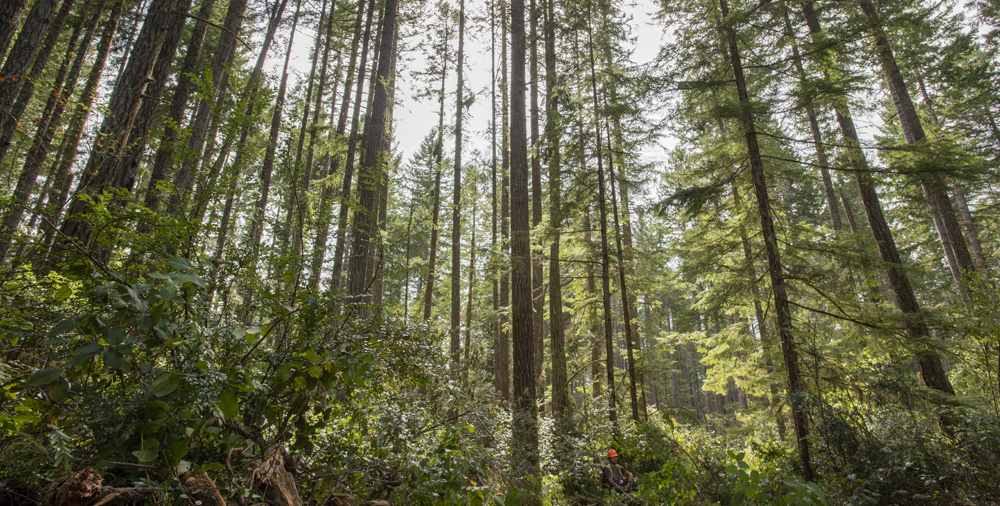
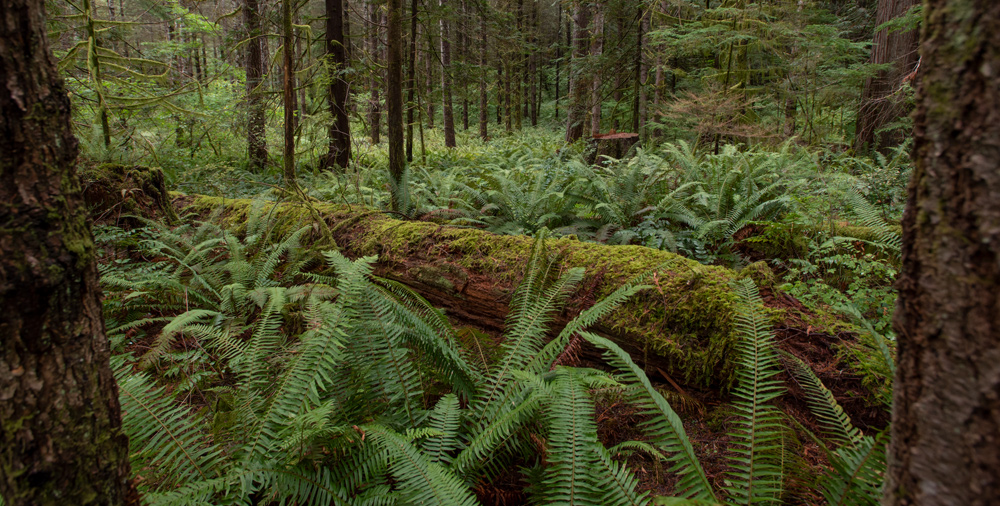
"We're foresters in that we're stewards," says Tom Strong, Chief Executive Officer of the Skokomish Indian Tribe, which manages 2,000 acres of Washington forests for its 800 tribal members. "We're not cutting and planting, seeking to develop our lands into a commodity. Instead, we're doing it to restore the forest."
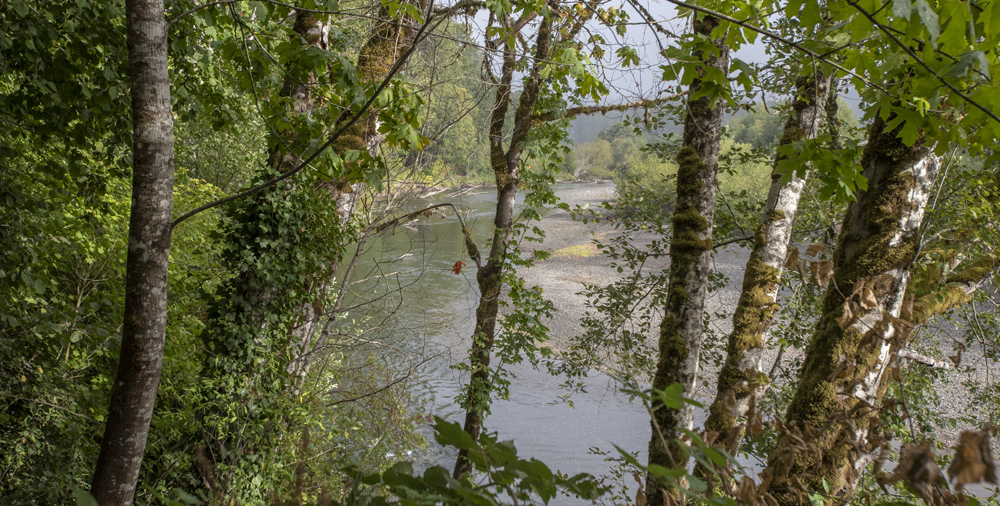
Over the past 100 years, the two dams on the North Fork Skokomish River have had a major impact on the entire ecosystem of Skokomish land. "We want to restore the entire Hood Canal watershed," Tom says. The forests are just one part.
Selling wood from Douglas fir trees the tribe selectively thinned will help fund this restoration. "We don't have an endless amount of money," Tom says. "But we would like to think we've got an endless amount of time."
Ben Hayes - Co-owner, Hyla Woods, Cherry Grove, Oregon
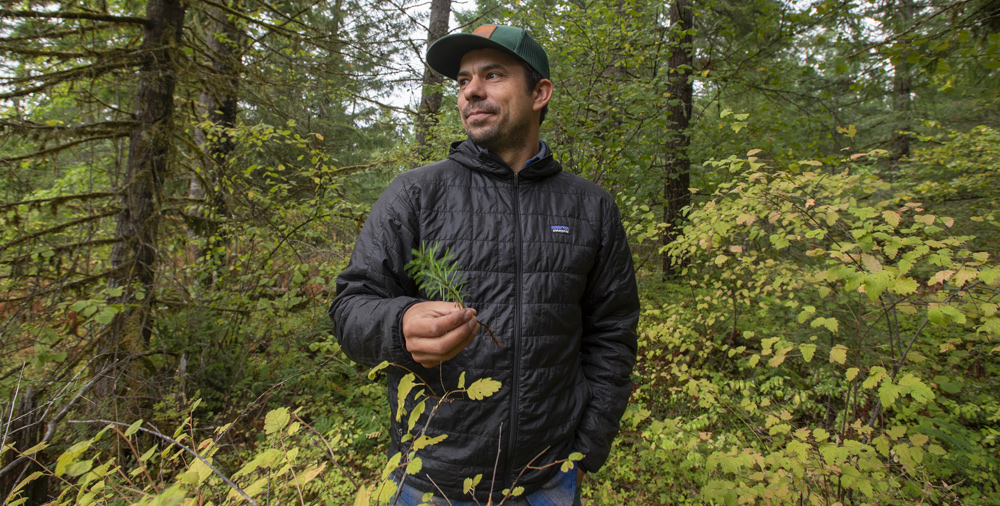
Ben Hayes is a sixth-generation forester who manages Hyla Woods, outside Cherry Grove, Oregon, with his father, Peter. He is also a sustainable-forestry consultant. At Hyla Woods, the Hayes experiment with selective thinning and patch cutting, instead of clear-cutting, to foster diversity of tree species, ages, and sizes.
"When you look 100 years out, having greater complexity in terms of species and the structure of the forest, you can increase the forest's resilience in the face of extreme weather and drought," he says.
"We're working toward a model of forestry that you could practice for the perpetual future,” Ben says. “It's a model that lifts up both rural and urban communities and the ecosystems we rely on."
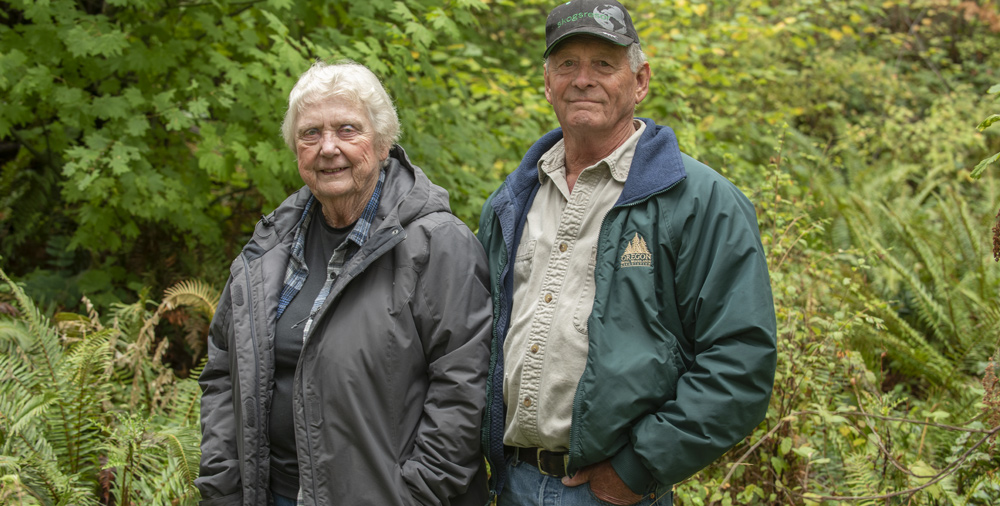
Richard and Ann Hanschu - Owners, Doneen, Forest Grove, Oregon
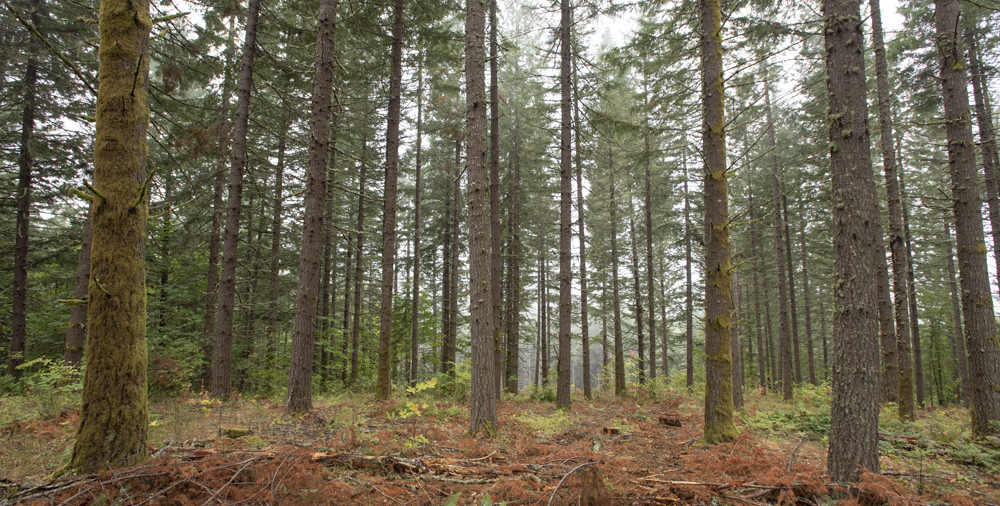
Ann Hanschu's father first bought land outside Forest Grove, Oregon, in 1956. Ann grew up trailing her father around the forest, learning from him. The Hanschus now have three children, four grandchildren, and five great-grandchildren.
Richard says, "We're planting trees that our grandchildren will see the profits from — not even our children. It's long-range thinking."
"A lot of the timber is older,” Ann adds. “We're laddering it with trees of different age groups — some 30-40 years old, some 10-20 years old — so the land can continue to produce a sustainable amount of wood."
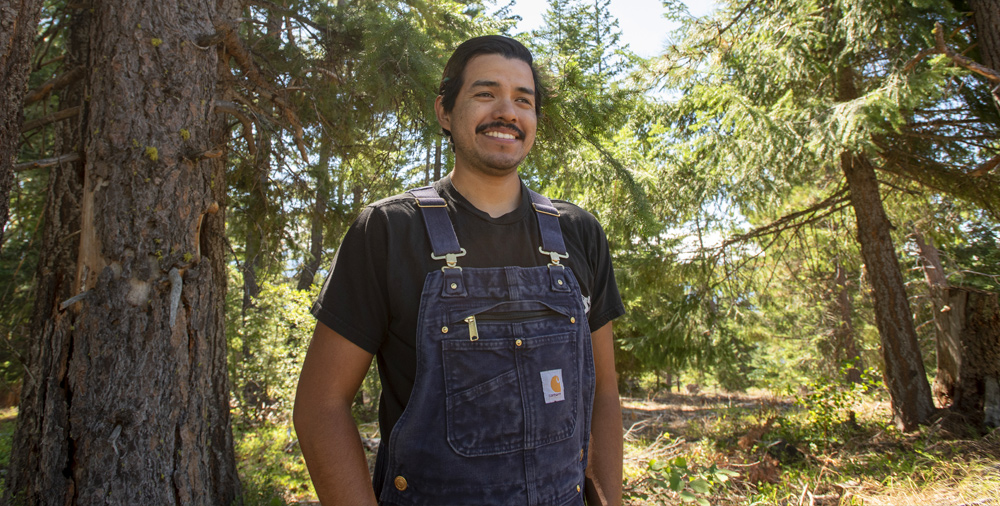
Herman Flamenco - Central Cascades Conservation Forester, The Nature Conservancy, Cle Elum, Washington
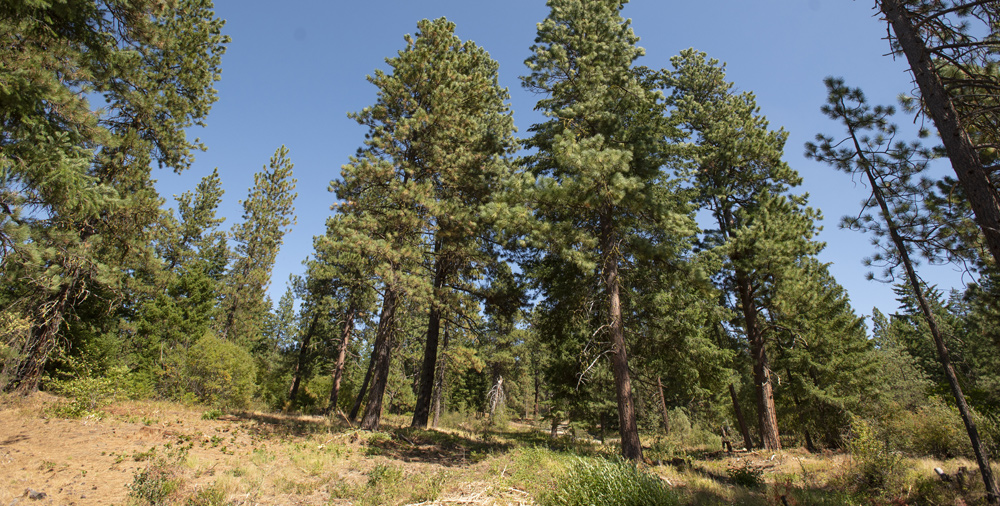
"We know historically that the stands we're working on were overstocked," says Herman Flamenco, Central Cascades conservation forester for the Nature Conservancy, of the 50,000 acres outside Cle Elum, Washington, the organization manages. Thinning the trees welcomes in light and biodiversity.
Some loggers in the region worry that this low-impact approach to forestry yields less lumber, and less profit, than clear-cutting. One local outfit took on this labor-intensive challenge, selectively harvesting Doug fir trees from steep slopes.
"Western Washington is wetter. In our dry climate, there's less moisture and increased fire risk," Herman says. "As we look at climate change, it's just going to get dryer. We want to make sure we can keep our forests around."
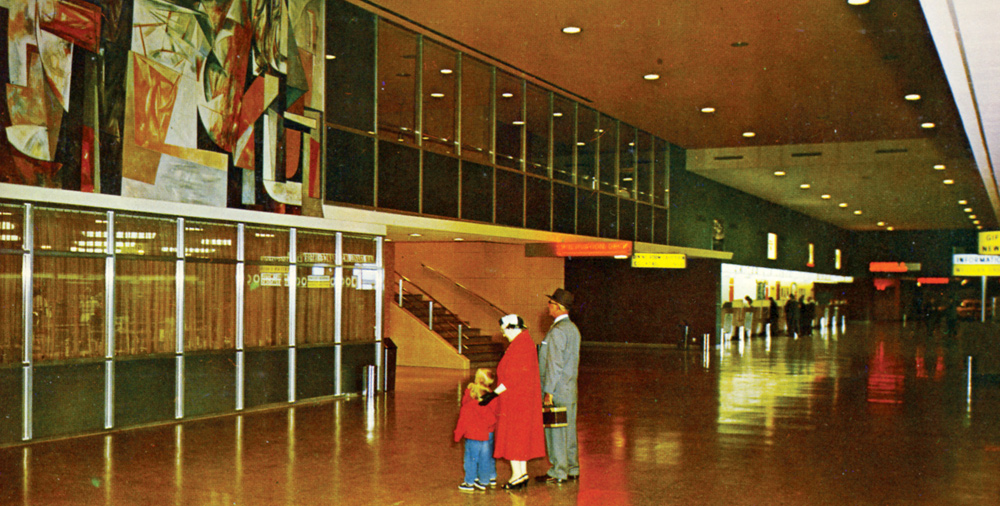
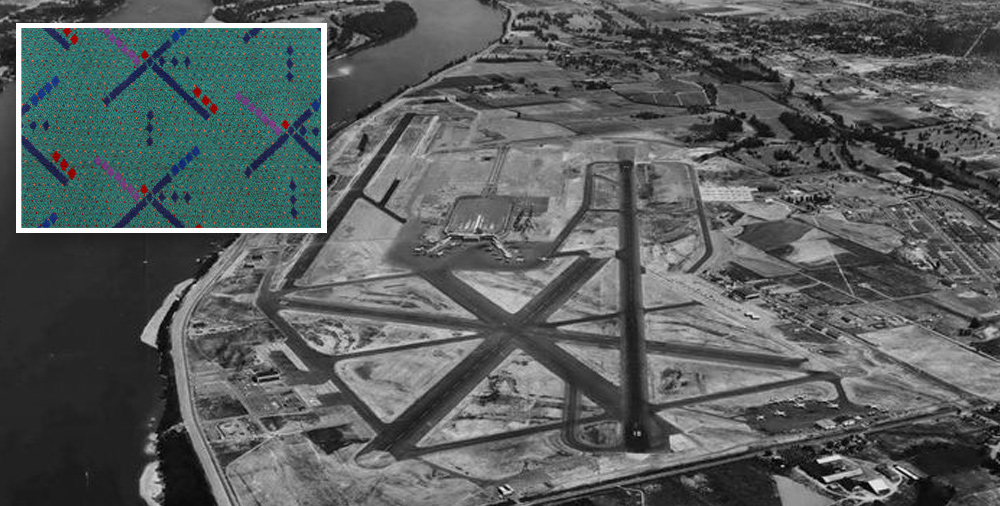
In the 1950s, back when people wore fancy hats to the airport, PDX’s main terminal had brown terrazzo floors.
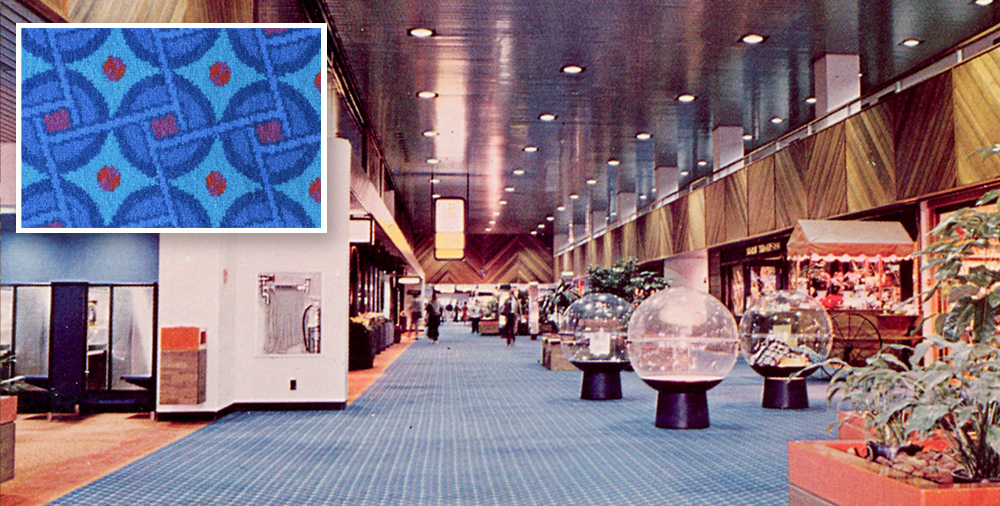
By the 1970s, blue carpet sporting the old Port of Portland logo replaced the terrazzo. The airport was so concerned about keeping the carpet clean that we banned gum-chewing indoors.
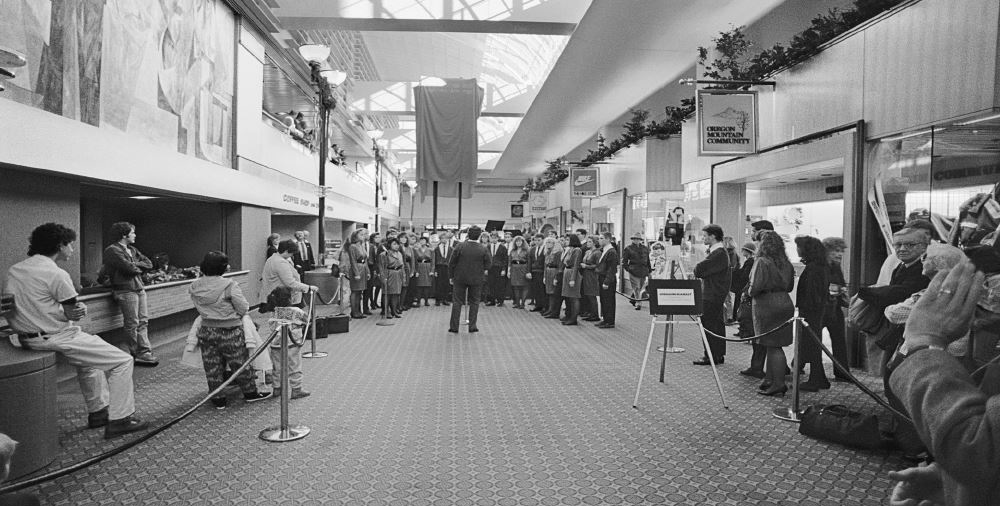
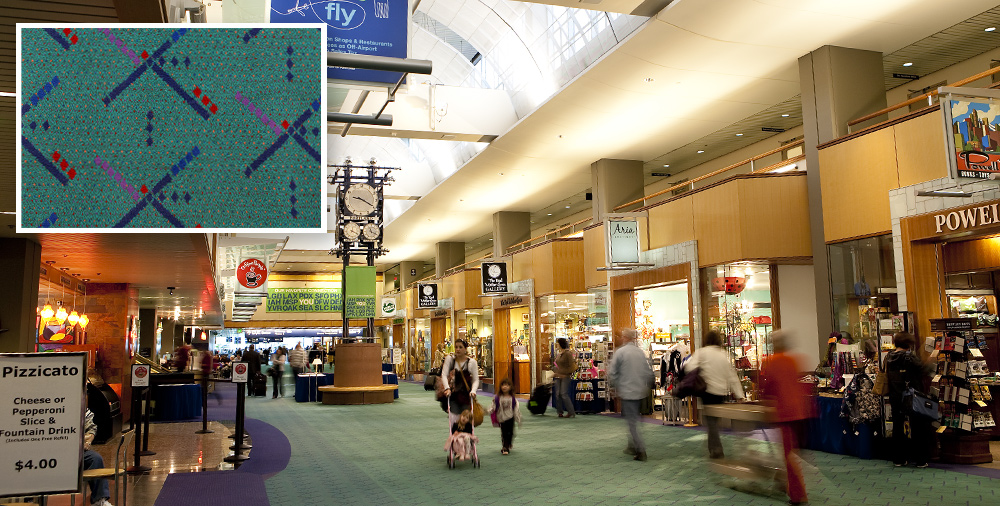
In the 1980s, PDX replaced the ski-chalet paneling in the Clocktower Plaza with high ceilings and skylights, but kept the blue carpet.
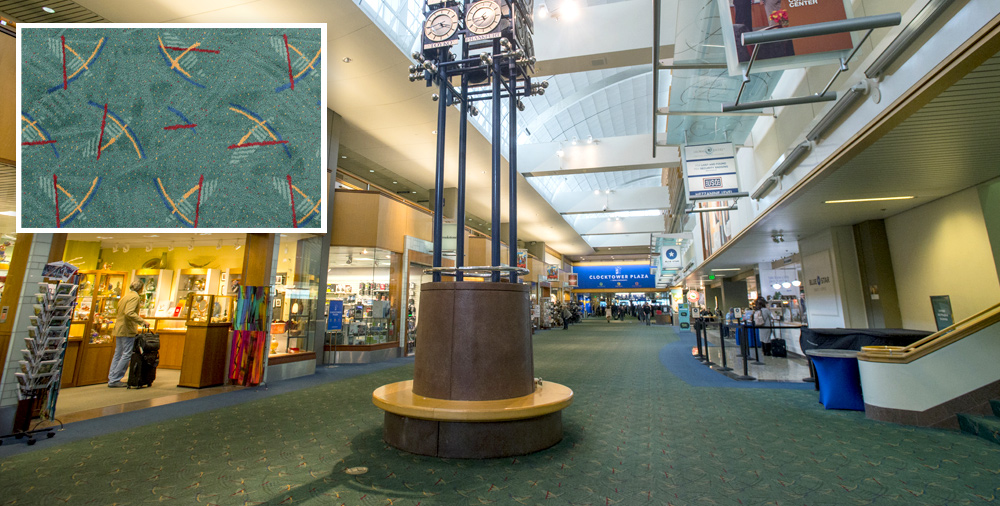
SRG Partnership, a Portland-based architecture firm, designed the pattern for the now-iconic carpet on the layout of the airport runways.
The Clocktower Plaza, post-1988, with the iconic carpet.
The Clocktower Plaza (before its demolition in 2021-22) with the new carpet.
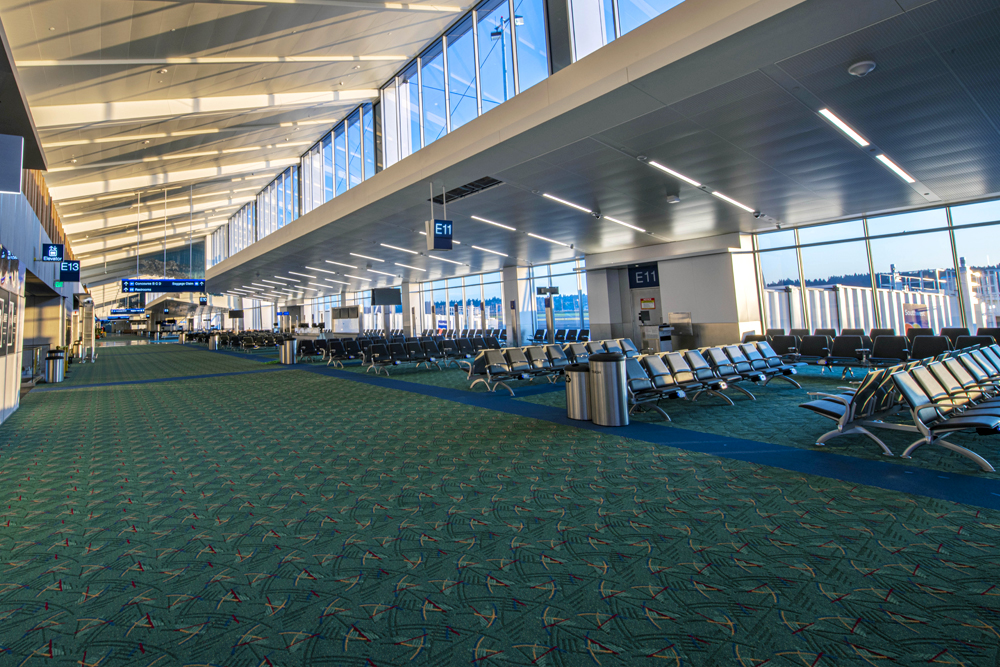

The flexible interior spaces were designed with the future of travel in mind — and to give you plenty of comfortable spots to recharge before your next flight.
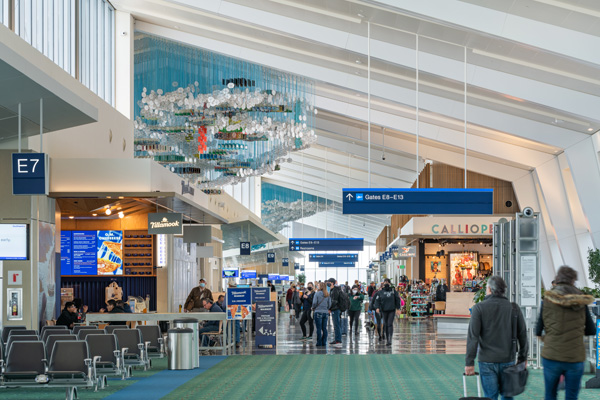
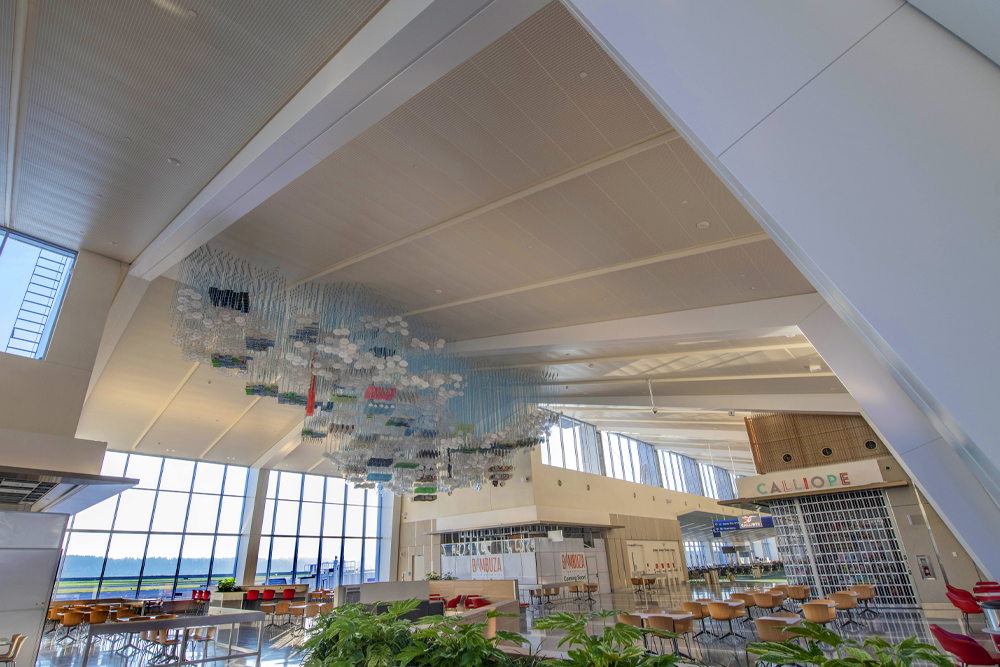
Two permanent installations from acclaimed contemporary artist Jacob Hashimoto hang like clouds above the concourse’s common areas.
Shops and restaurants are clustered together like city blocks, with a pedestrian-friendly scale and lots of room to spread out.
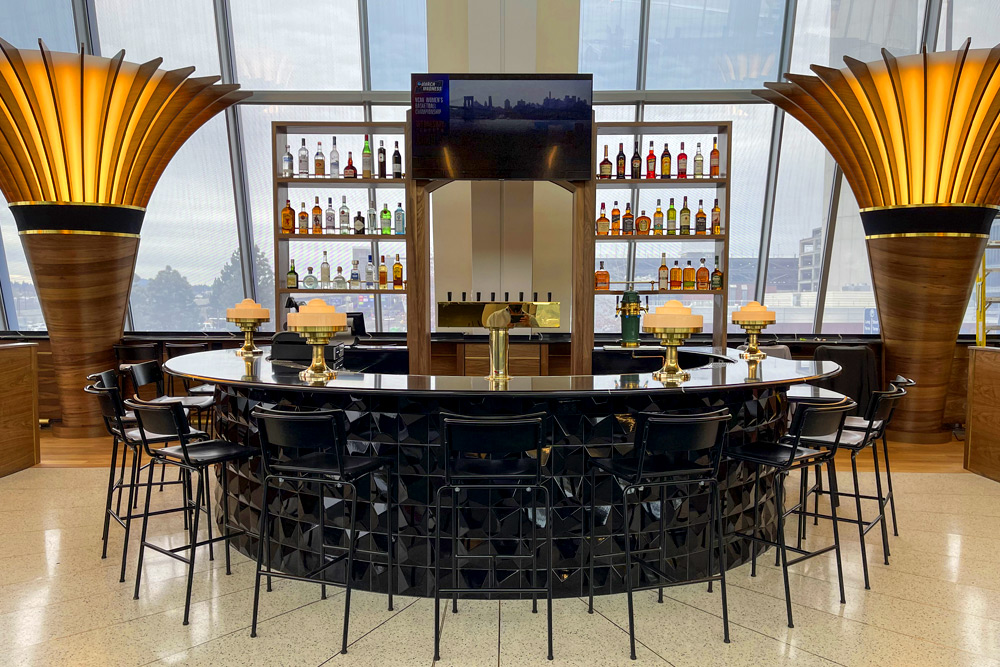
PDX’s swanky new bar, Juliett, honors women in aviation with mid-20th-century style, top-class cocktails, and local wines and beers.
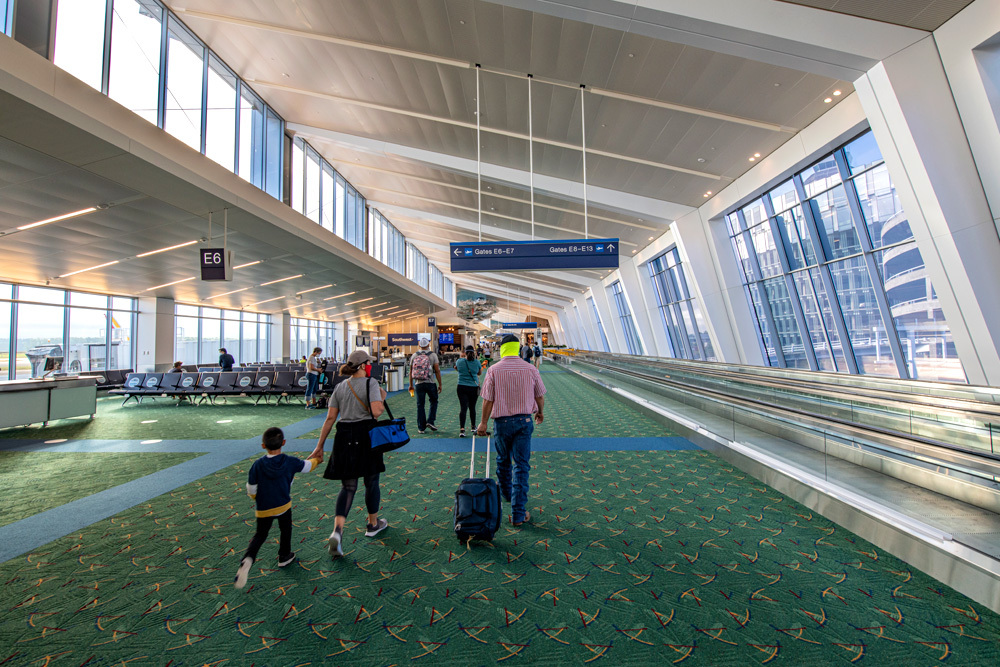
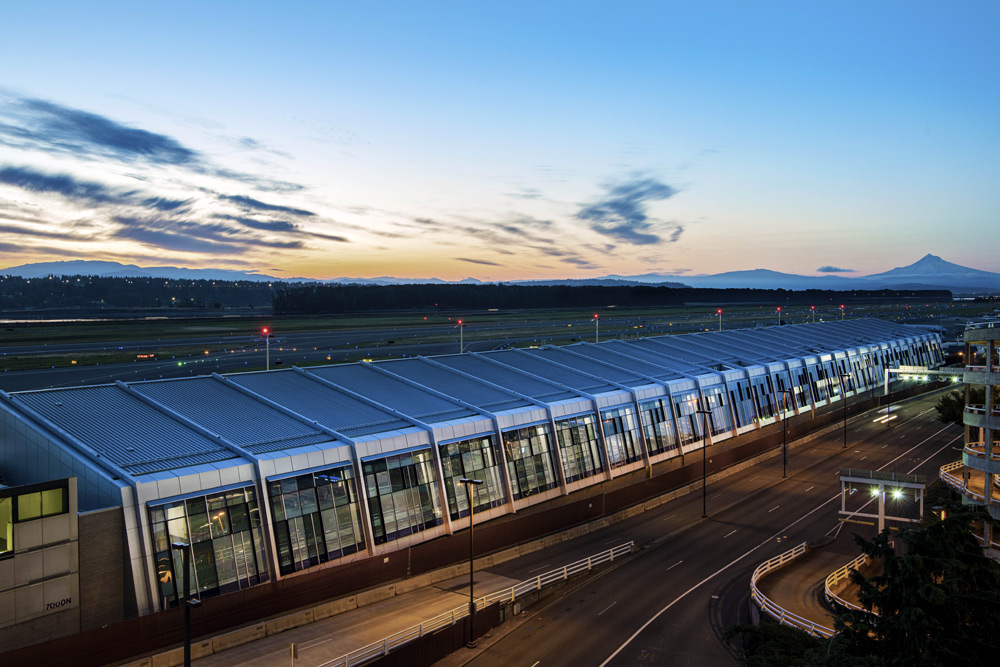
Sky-high windows fill the interior with daylight while maximizing the concourse extension’s energy efficiency.
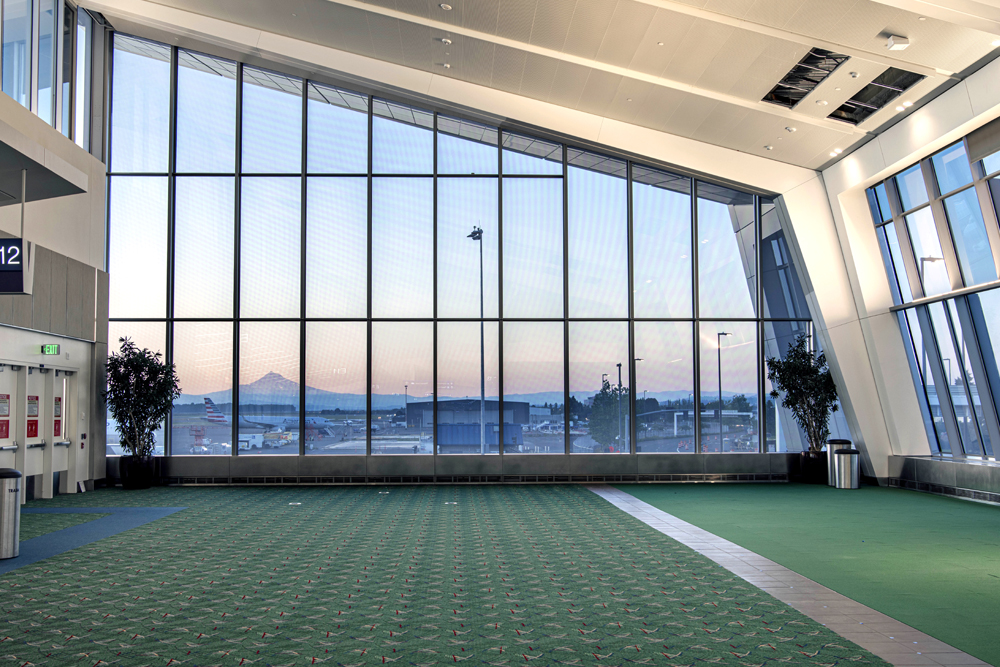
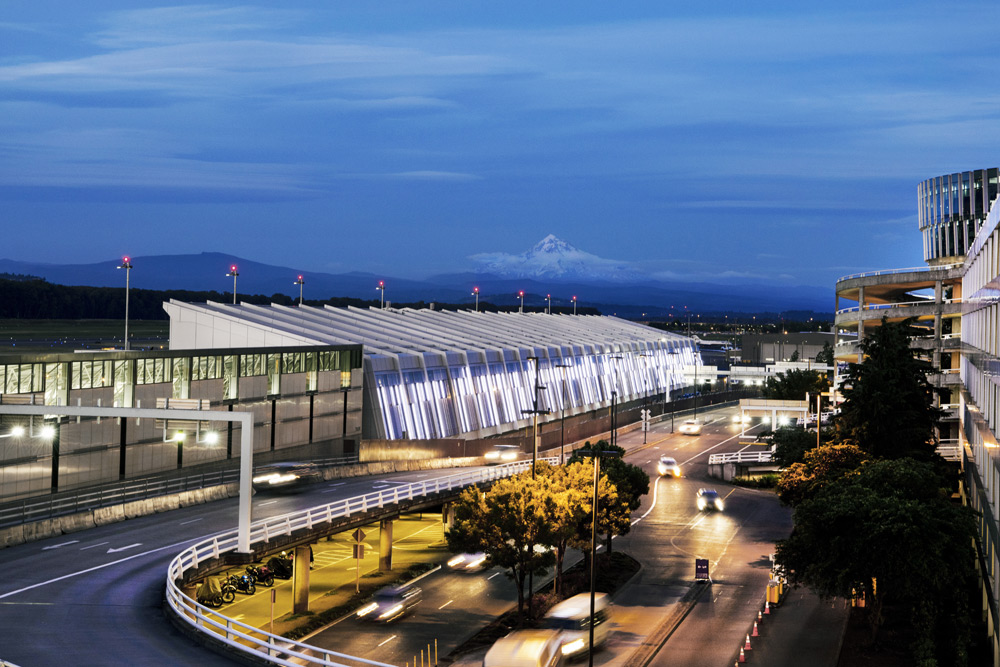
At the east end of the concourse, a wall of windows opens up this epic view of Mt. Hood, where you’ll definitely want to pose for a photo before takeoff.
The Concourse E extension project is the dedicated home for Southwest Airlines at PDX, with six new gates.
Remember the view of Mt. Hood on Concourse E? It’s coming back, brighter than ever.
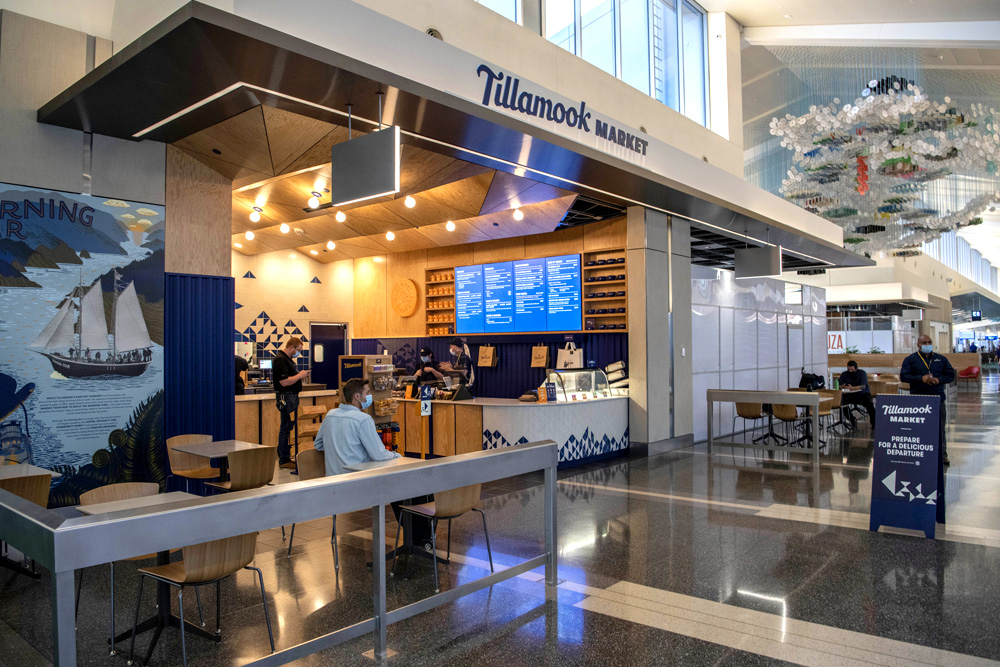
Tillamook’s menu includes the best of the classics with fried cheese curds and a signature grilled cheese.
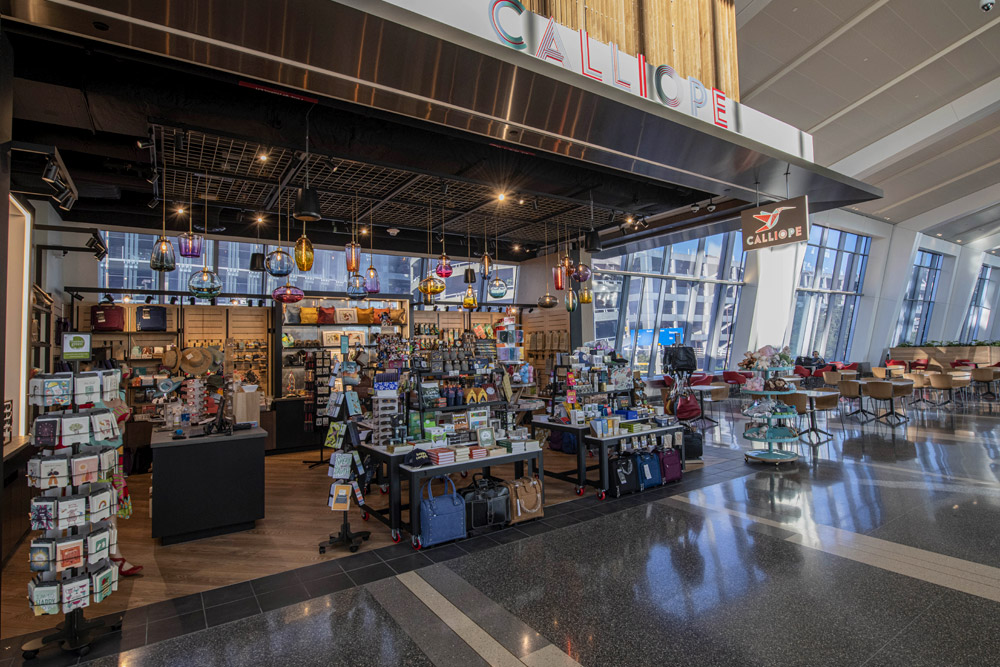
Calliope takes its name from one of Oregon’s native hummingbirds and showcases creative and playful keepsakes.
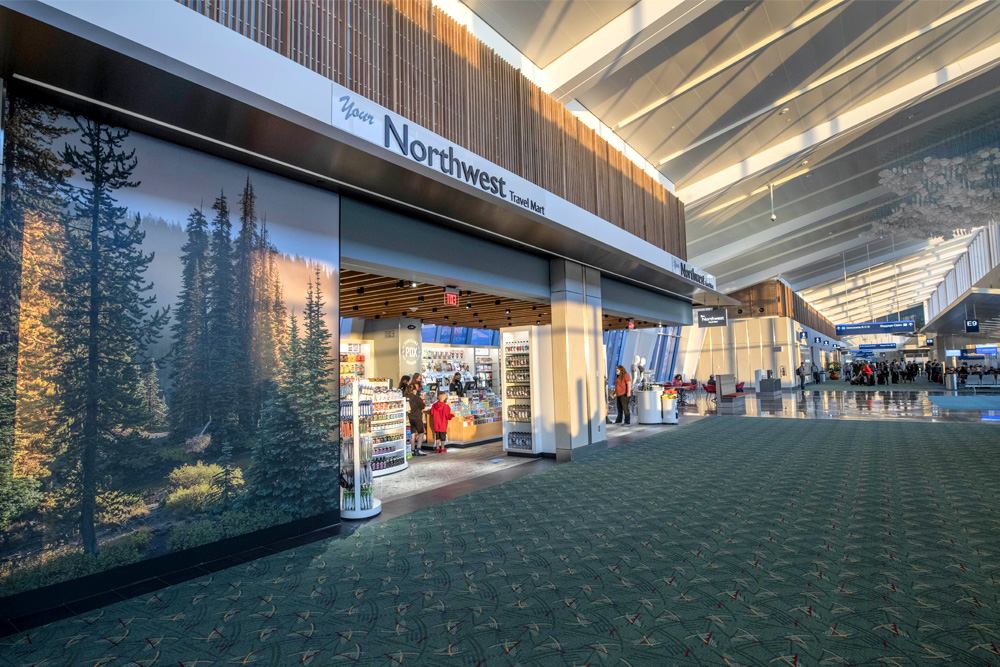
Grab your favorite book, magazine or newspaper at Your Northwest Travel Mart.
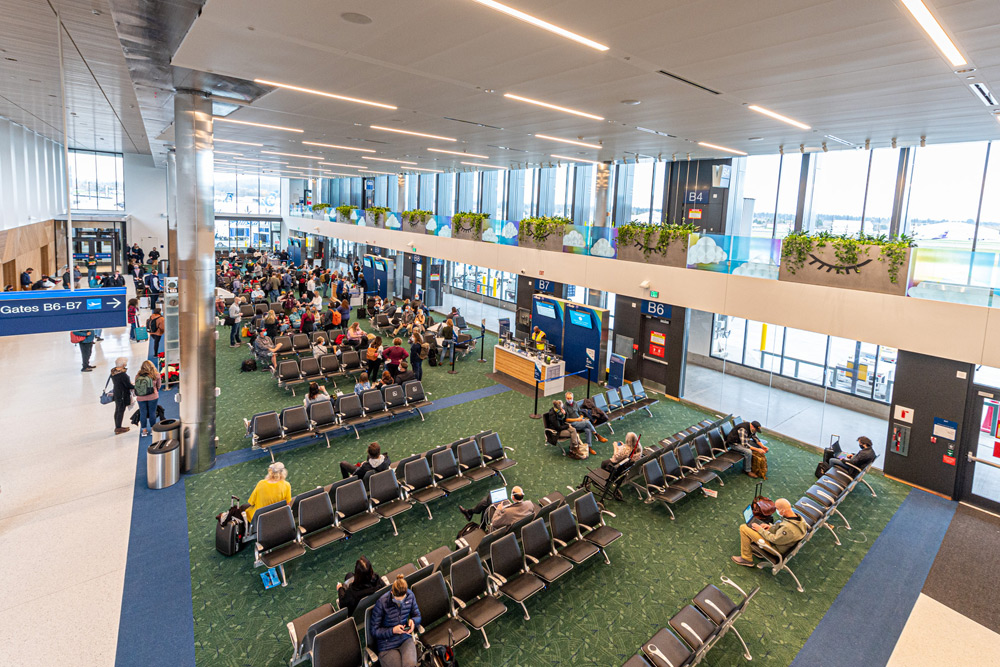
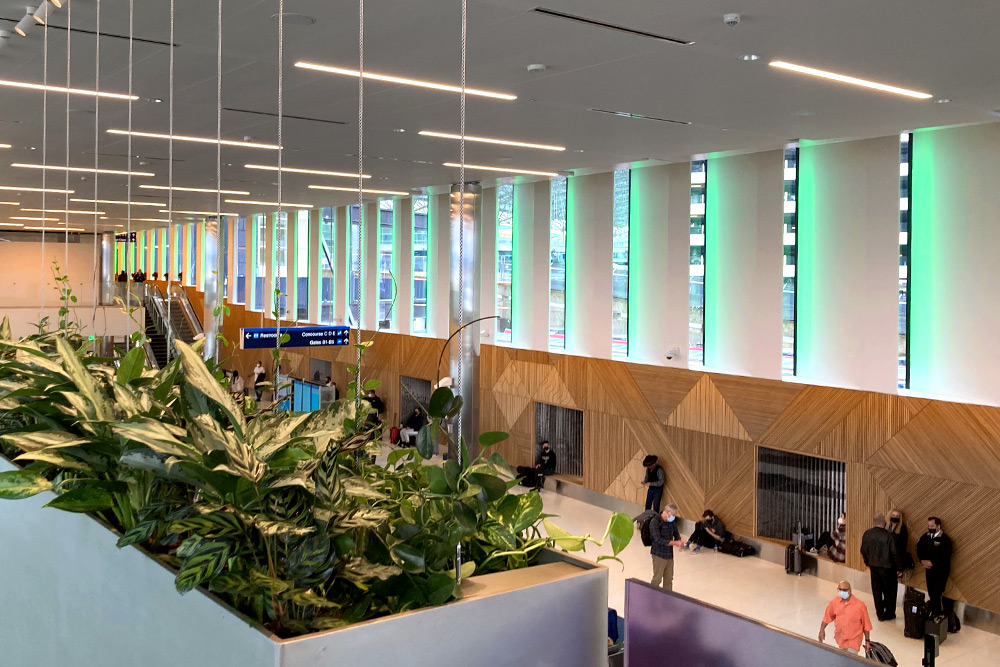
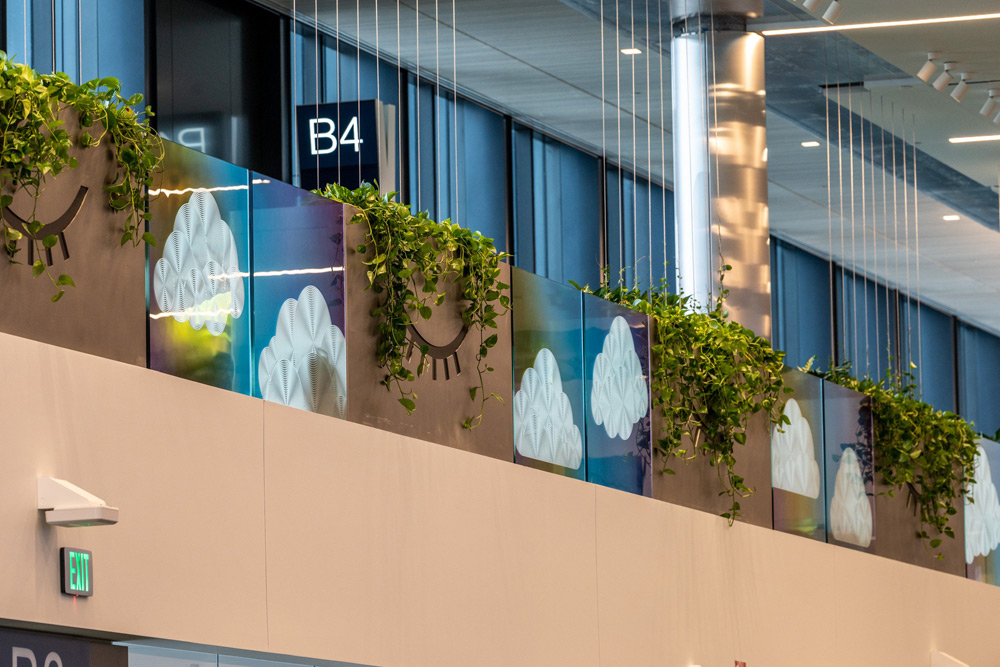
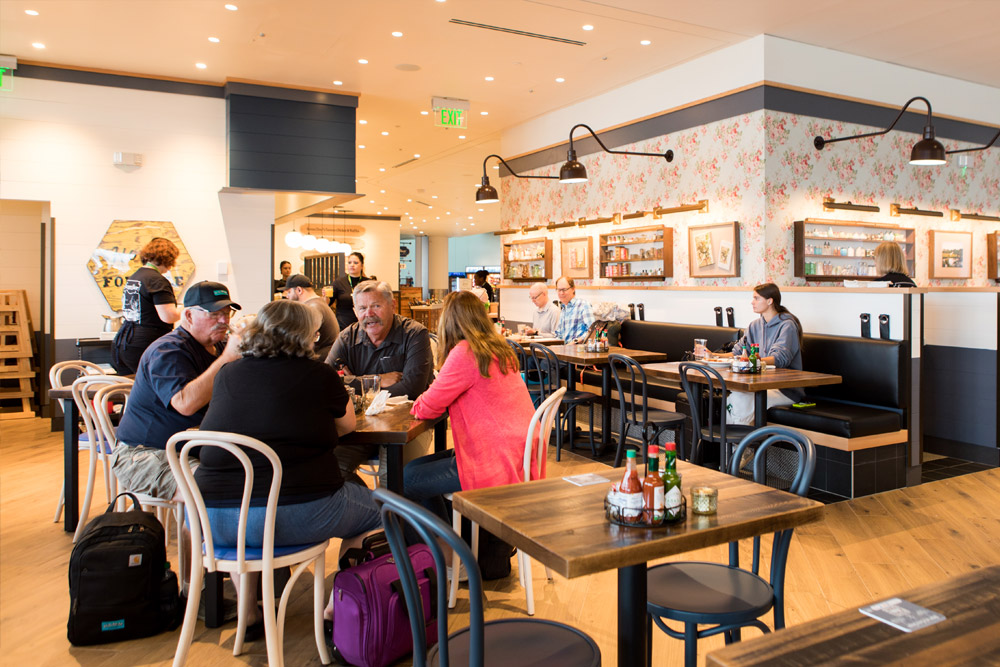
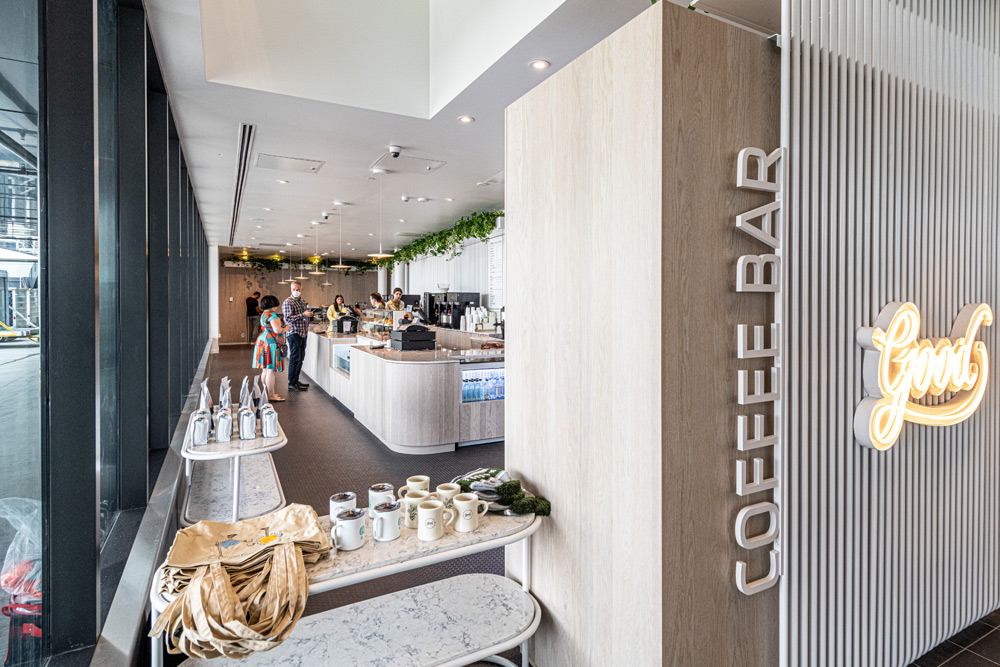
Concourse B's 38-foot-high ceilings and 6,900 square feet of windows don't just let light in. They let you watch the airport in action. "I think this airport gave us a chance to celebrate the romance of flight," says Gene Sandoval of ZGF, the architecture firm that designed the new concourse.
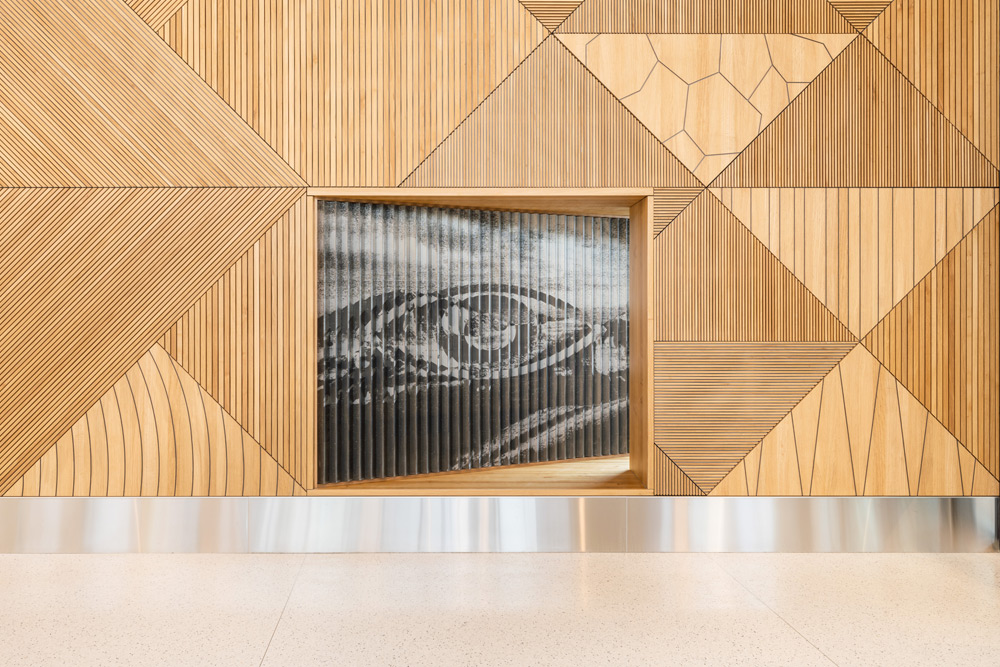
ZGF Architects was inspired to bring the Pacific Northwest’s natural world indoors. You can contemplate the plants hanging from the ceiling and the Oregon white-oak walls as you relax in B’s comfy new seats. (Bonus: More power adapters!)
RYAN! Feddersen’s art installation, which fills the concourse, is made up of three interconnected pieces. The “Sentinel” landscapes and abstract “Habitat Tiles” are pictured here.
RYAN! is an enrolled member of the Confederated Tribes of the Colville Reservation. She draws inspiration from the region’s traditions and landscape for these pieces, which include the gently rolling “Cloud Walk” overhead.
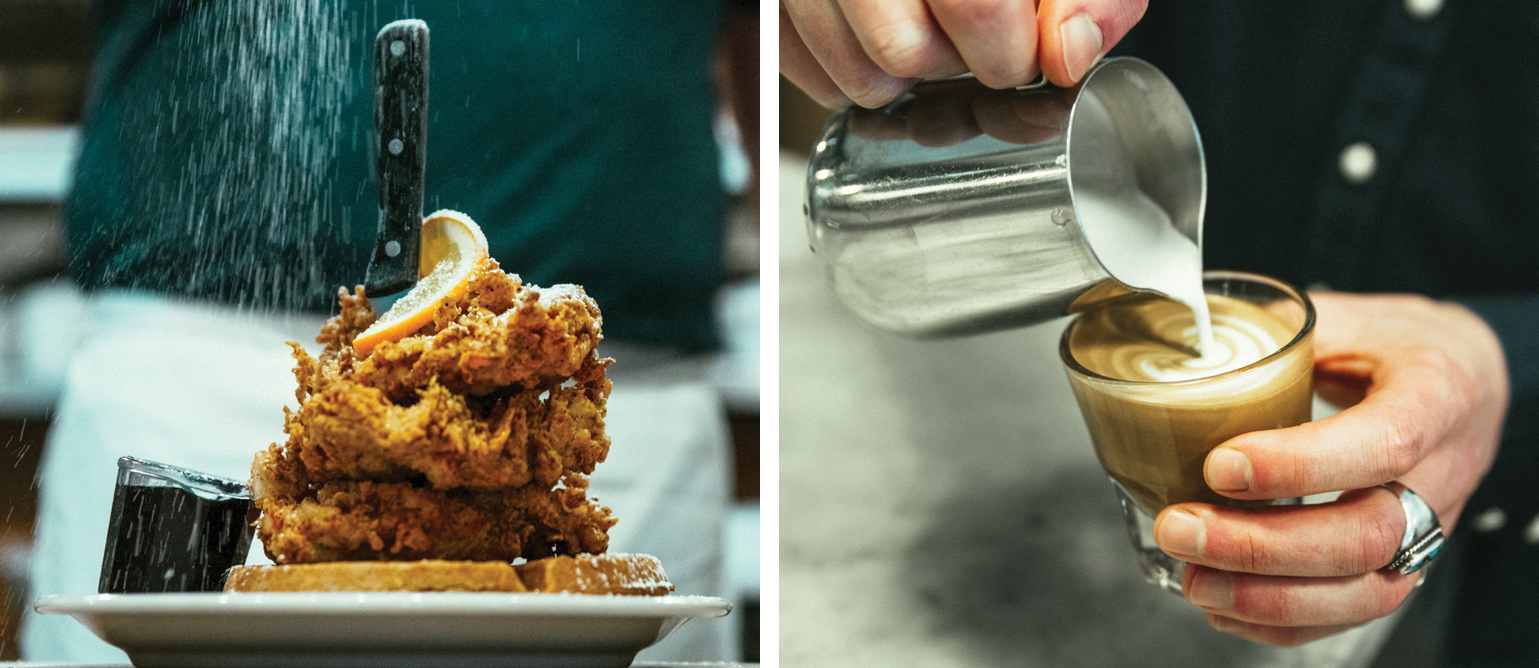
Nicole and David Mouton, in partnership with HMSHost, opened an outpost of Portland’s beloved Screen Door Restaurant on Concourse B. Find Screen Door’s legendary fried chicken and waffles here from breakfast until dinnertime.
Sam and Nick Purvis, the brothers behind Good Coffee, source fresh coffee beans and teas from all over the world. Pick up a pastry or a bag of beans, too!
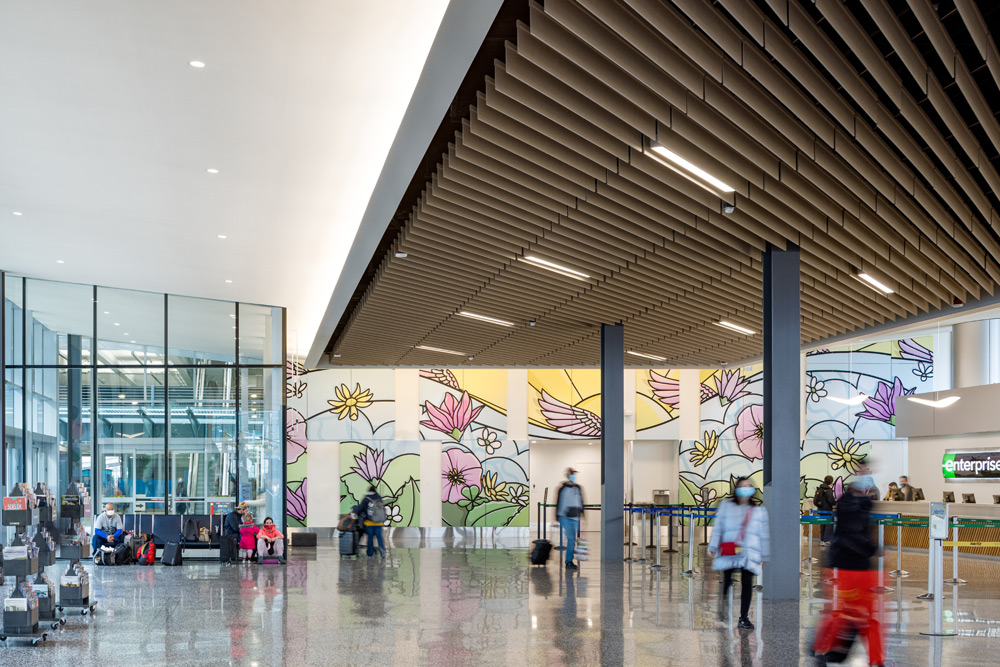
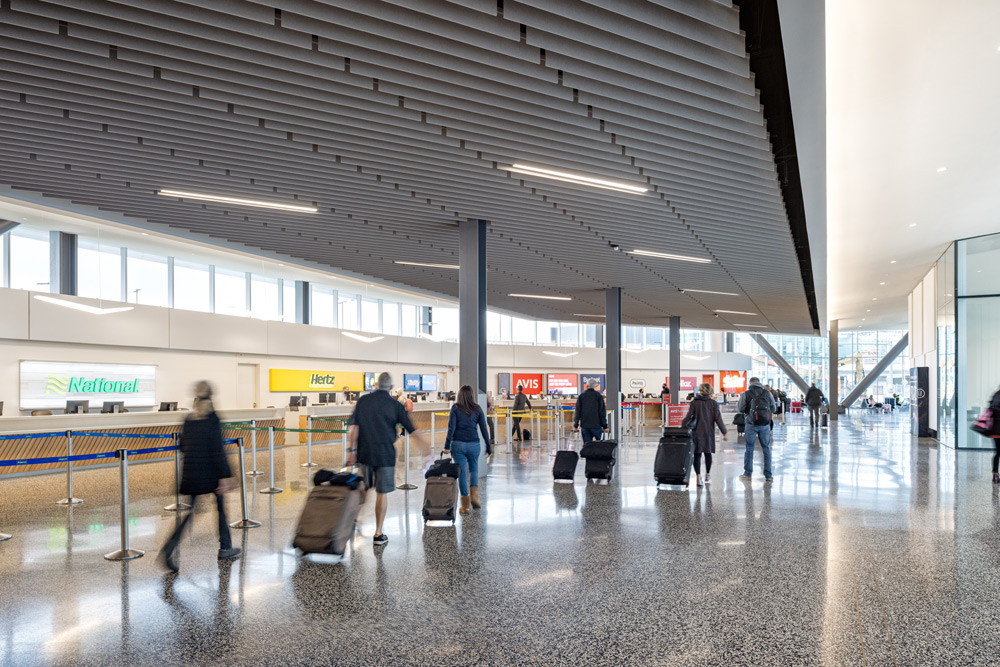
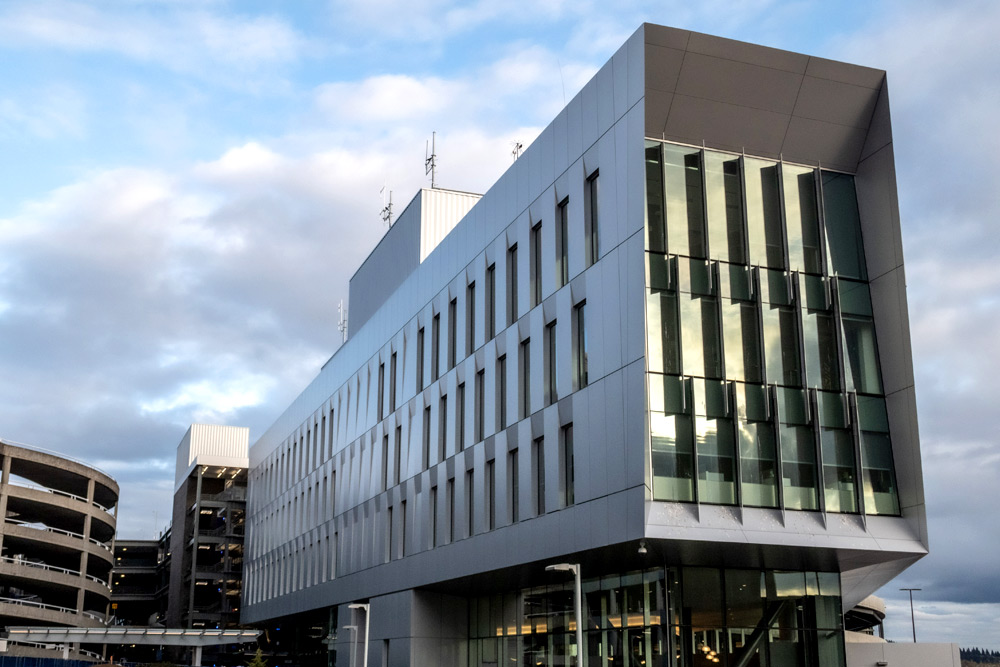
Our new rental car center opened in November 2021.
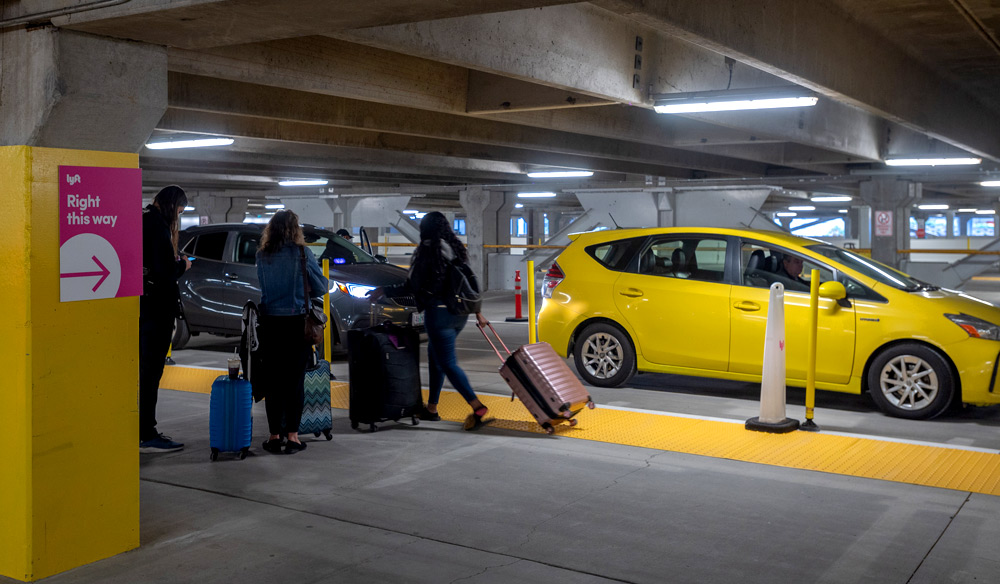
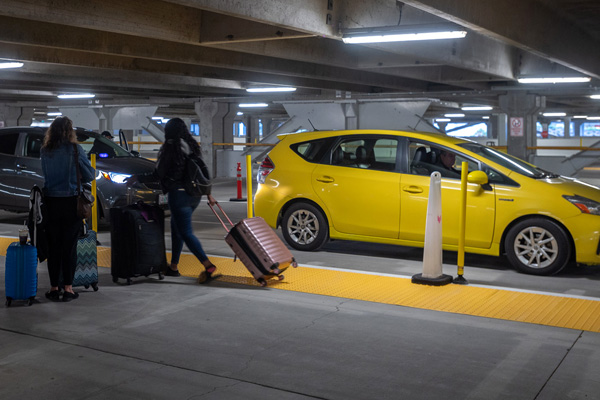
All rental car brands are now on-site at PDX – no more shuttles to pick up your car.
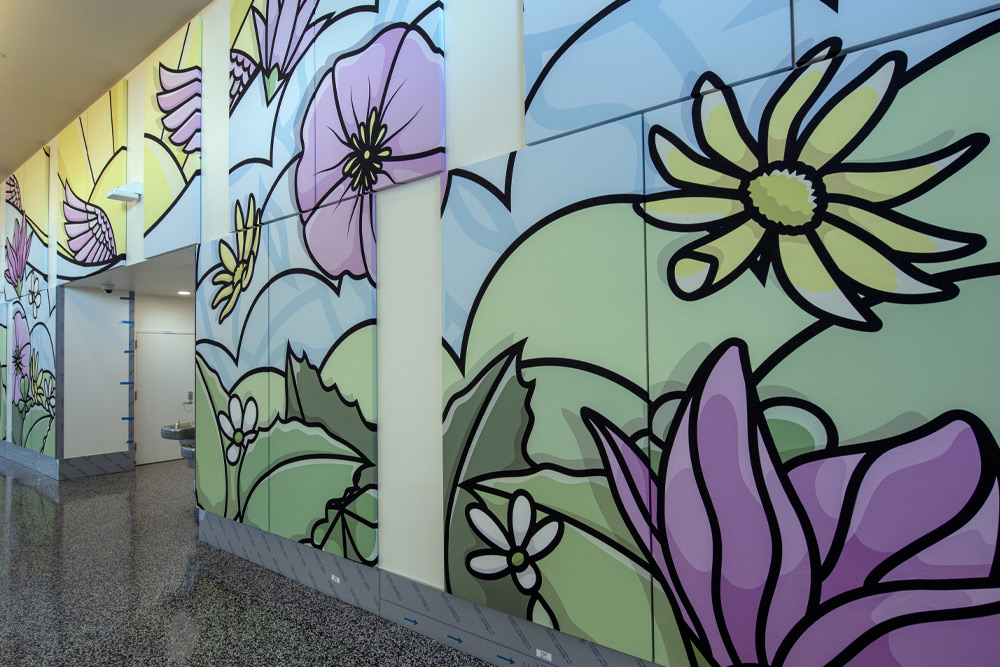
Perez Westbrooks' colorful digital mural celebrates Northwest flora.
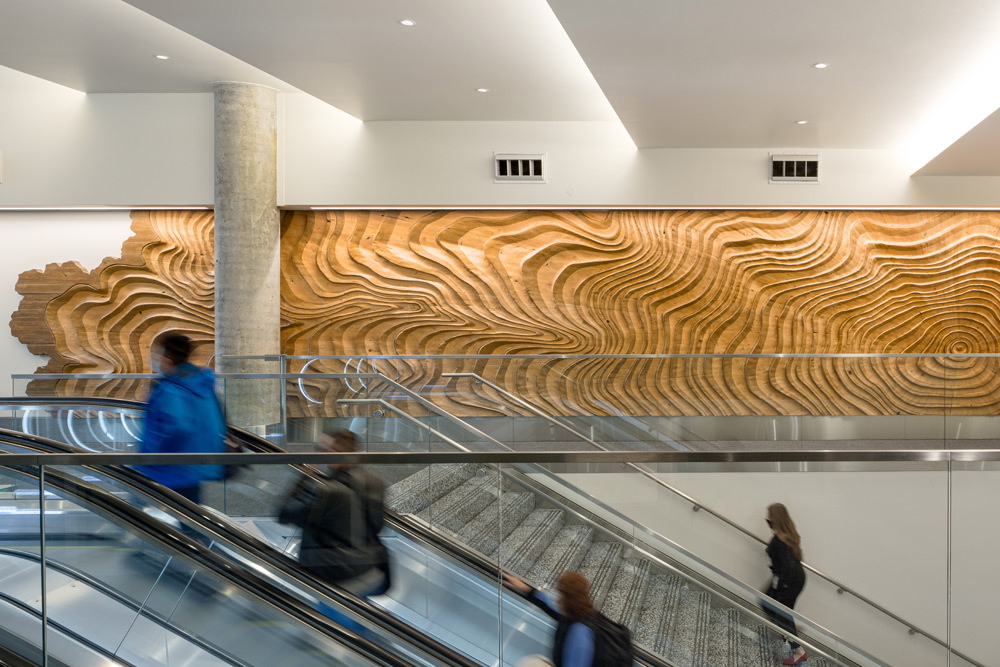
Ben Butler's swirling wood sculpture is made from reclaimed Douglas fir.
The new facility also adds 30 ADA parking spots, more than 30 electric vehicle charging stations, and 2,200 long-term parking spaces to the airport.
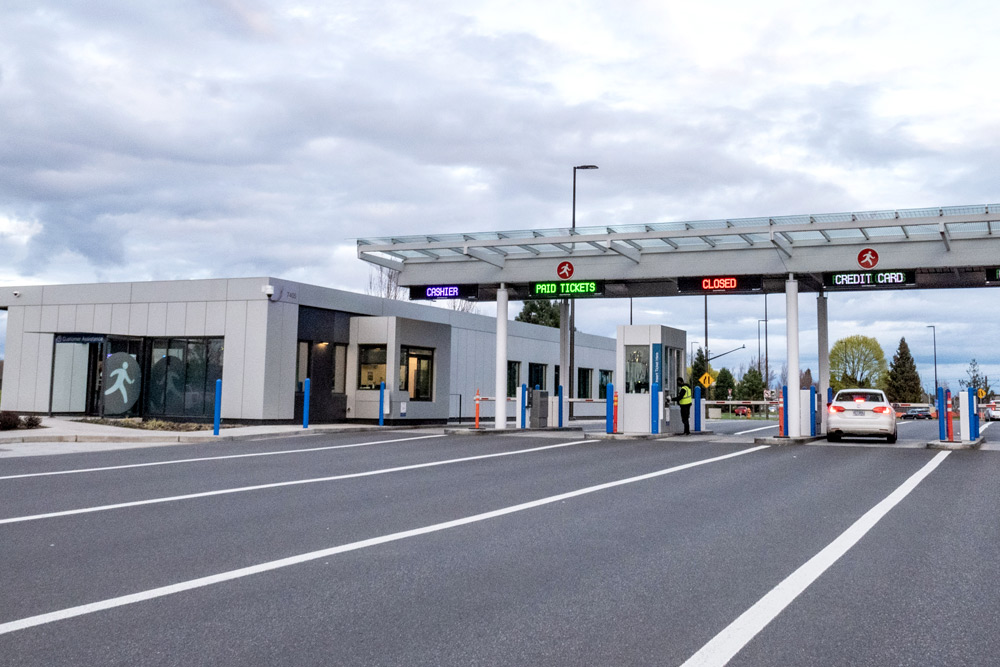
Adding more lanes to our new, relocated exit toll plaza helps you leave PDX more quickly.
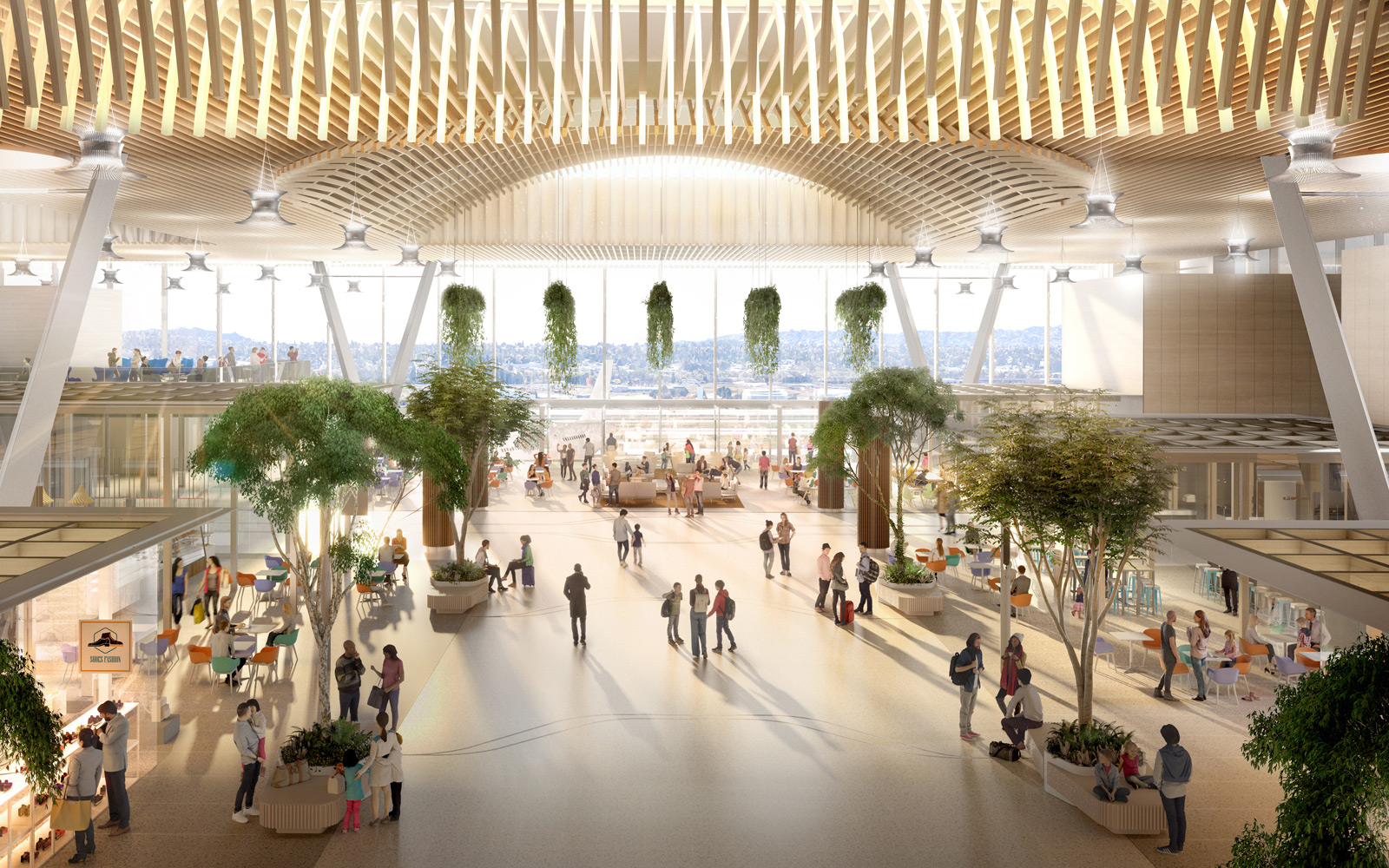
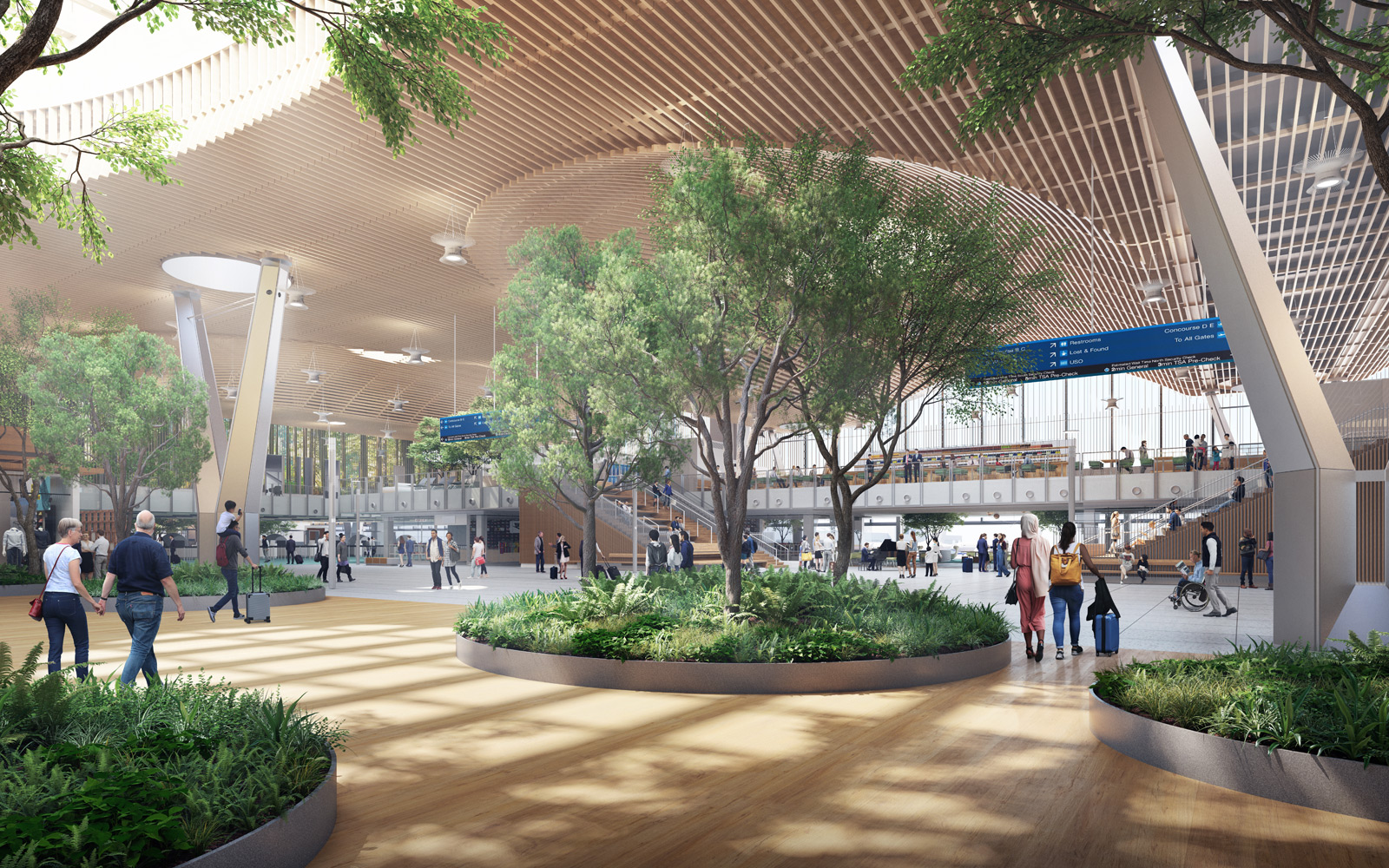
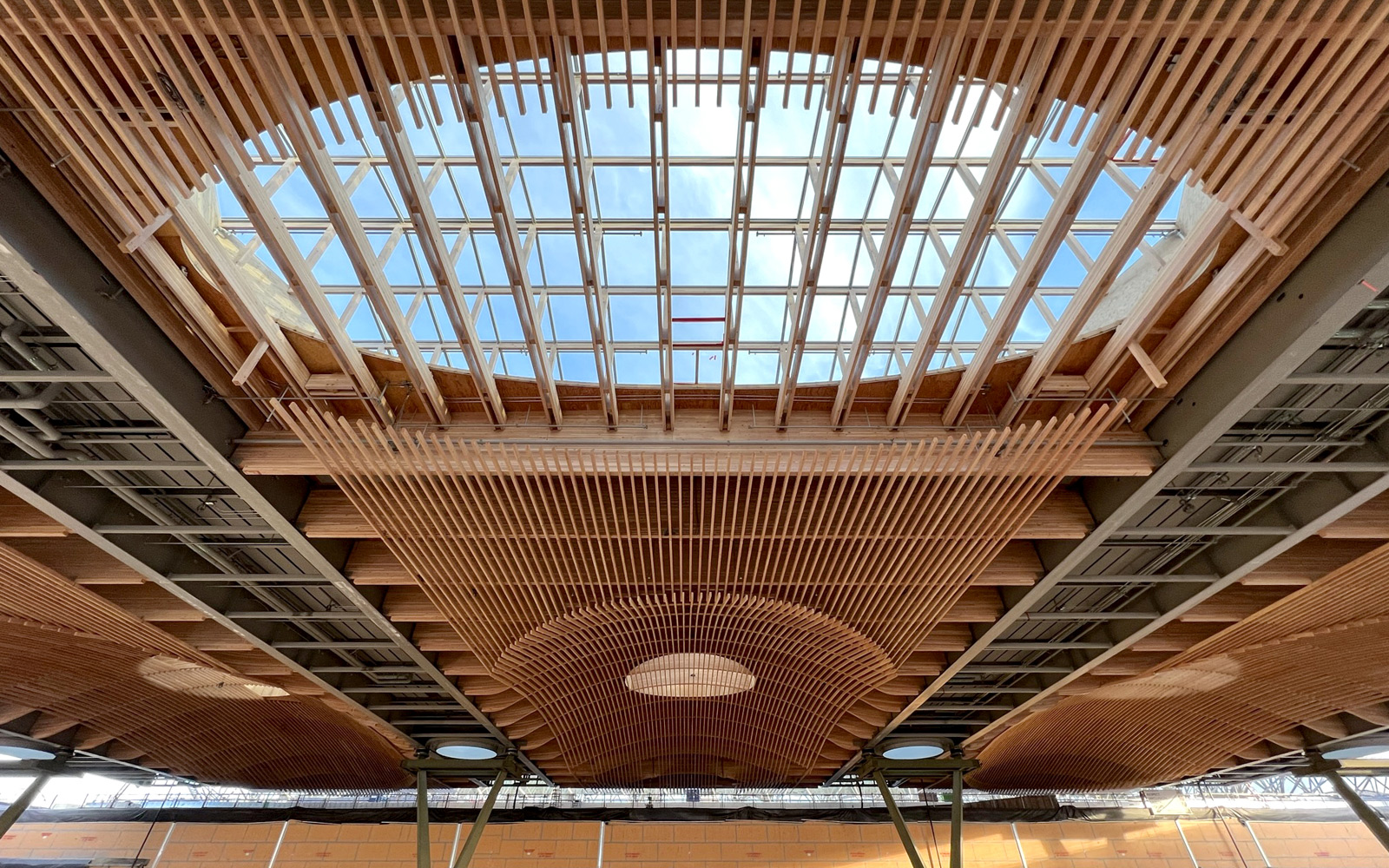
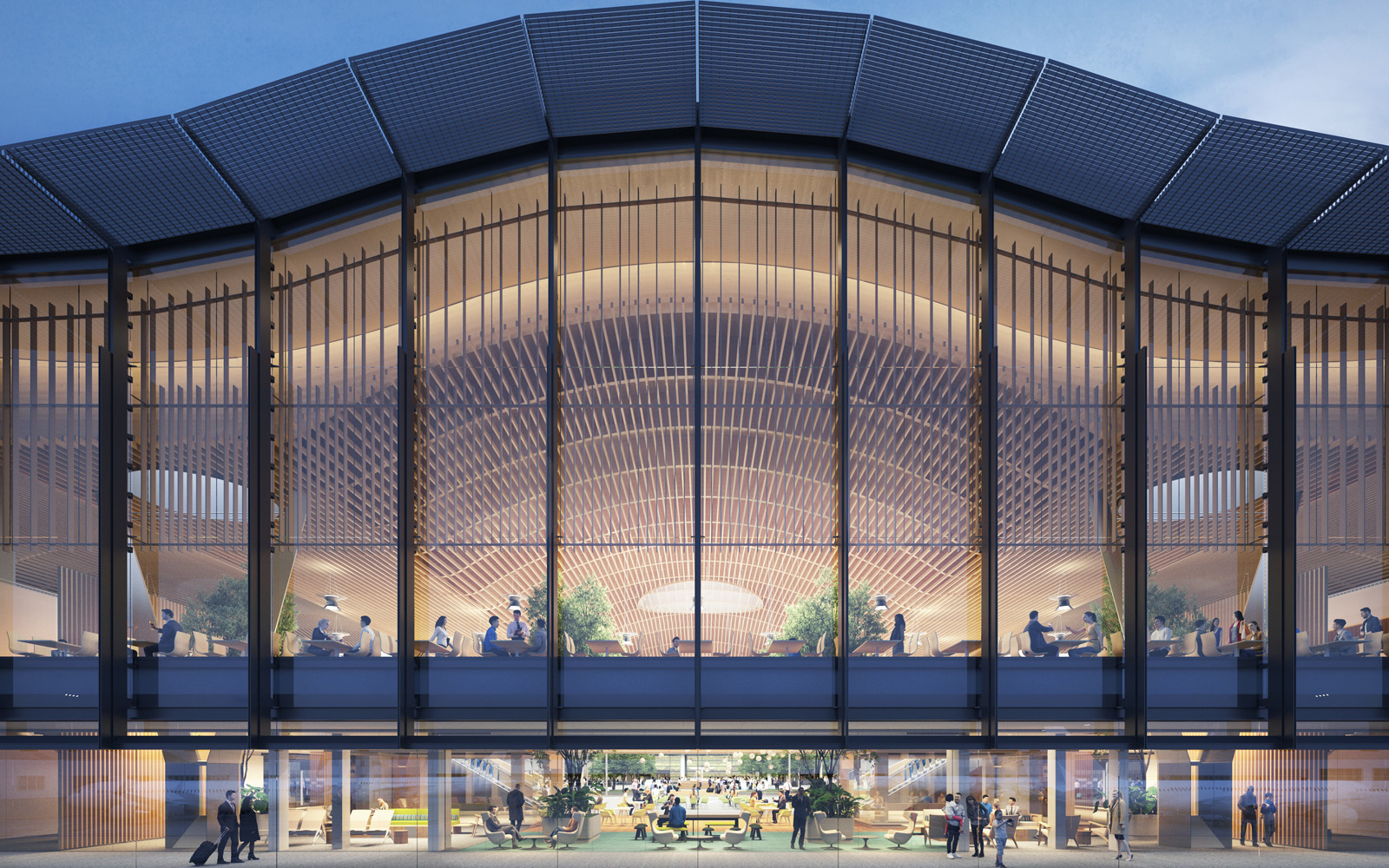
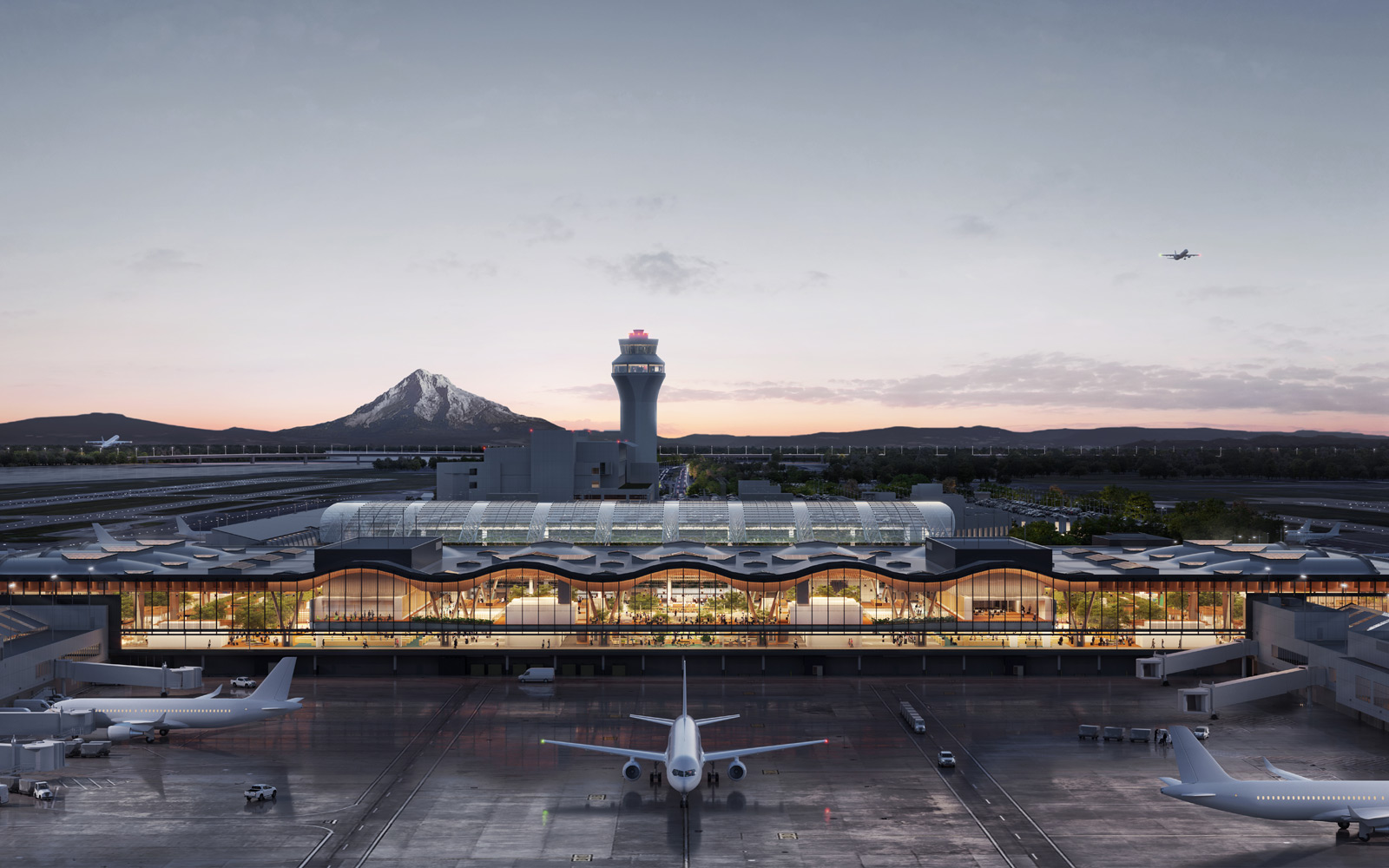
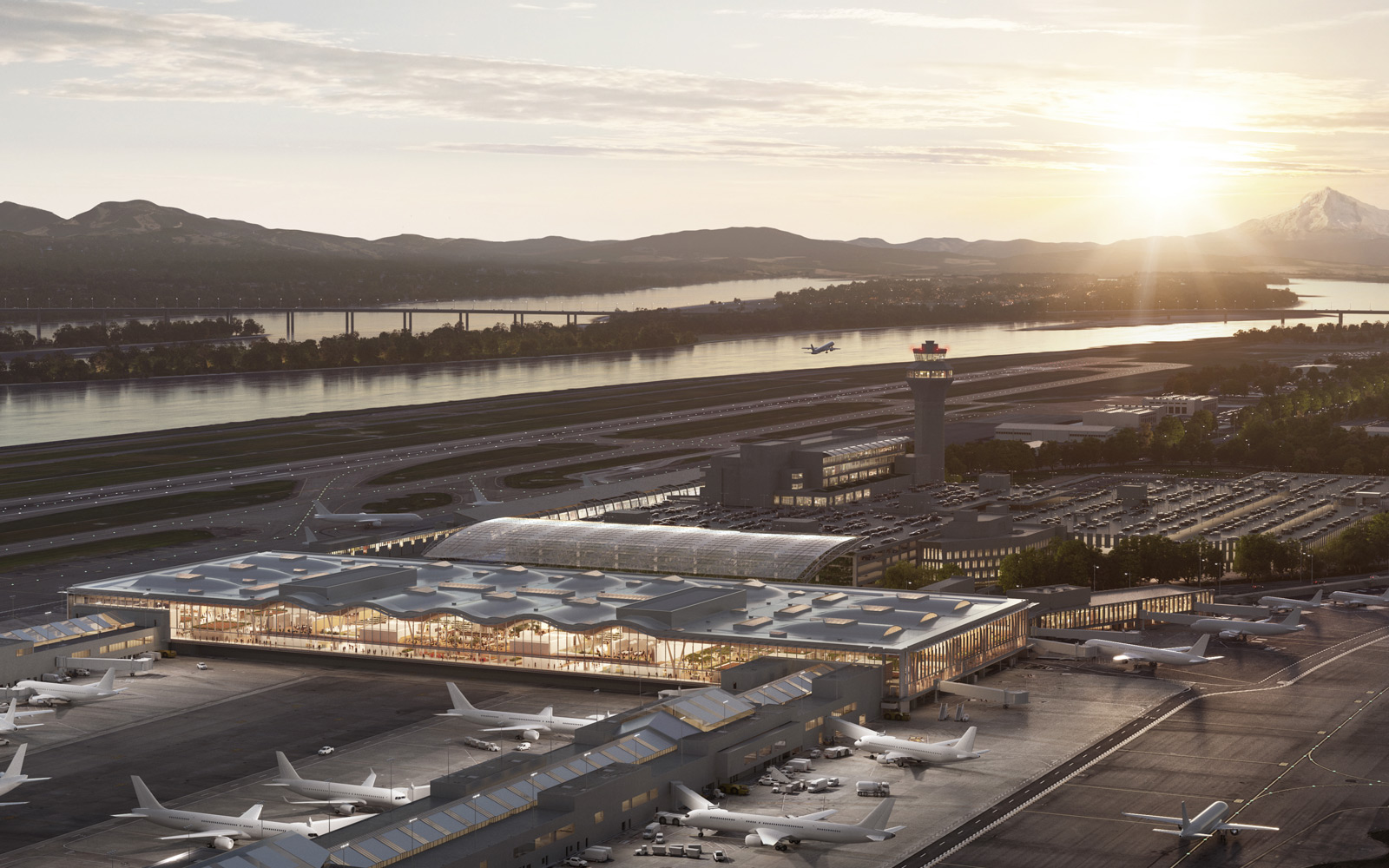
Every design decision we make is about keeping the heart and soul of PDX intact. You’ll see homages to all the things you love about our city and region in the new airport designs.
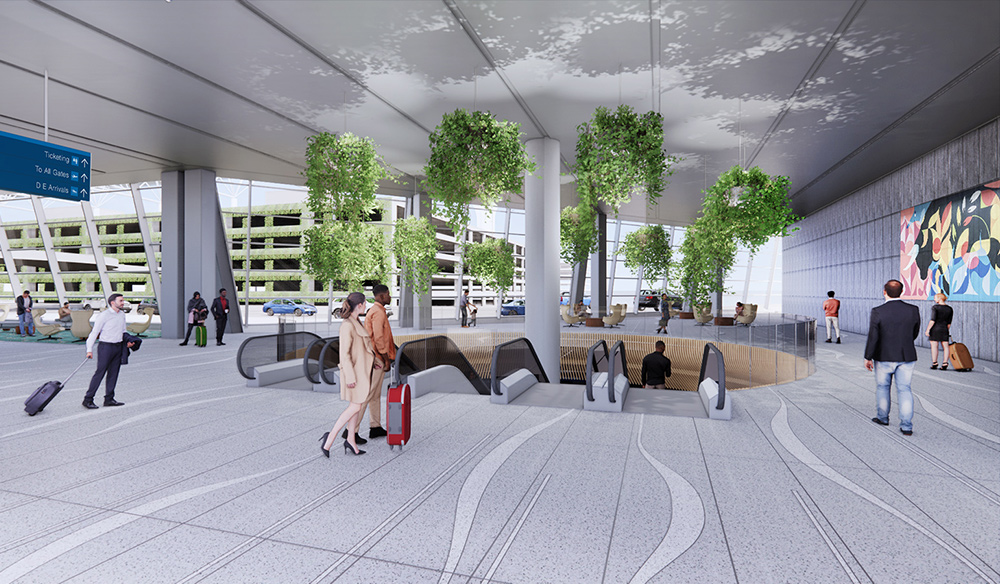
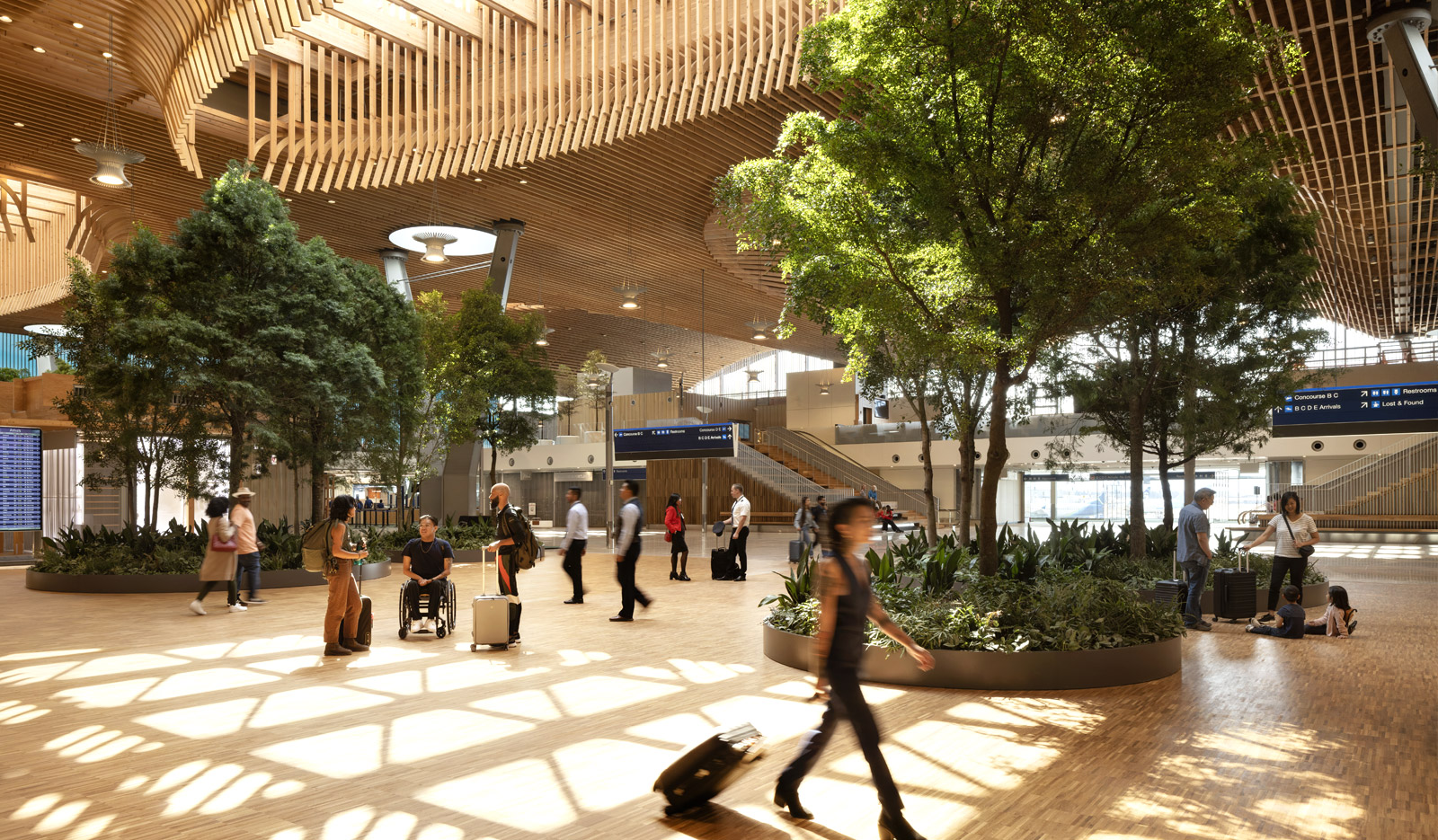
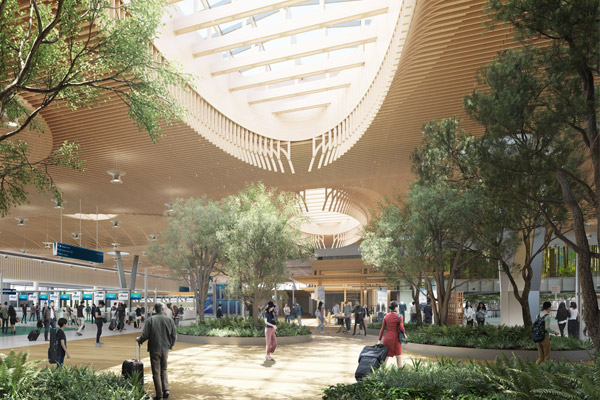
You’ll notice subtle nods to the Pacific Northwest landscape throughout the space. Natural light, living trees, and native Oregon foliage may give you the feeling of walking through a park.
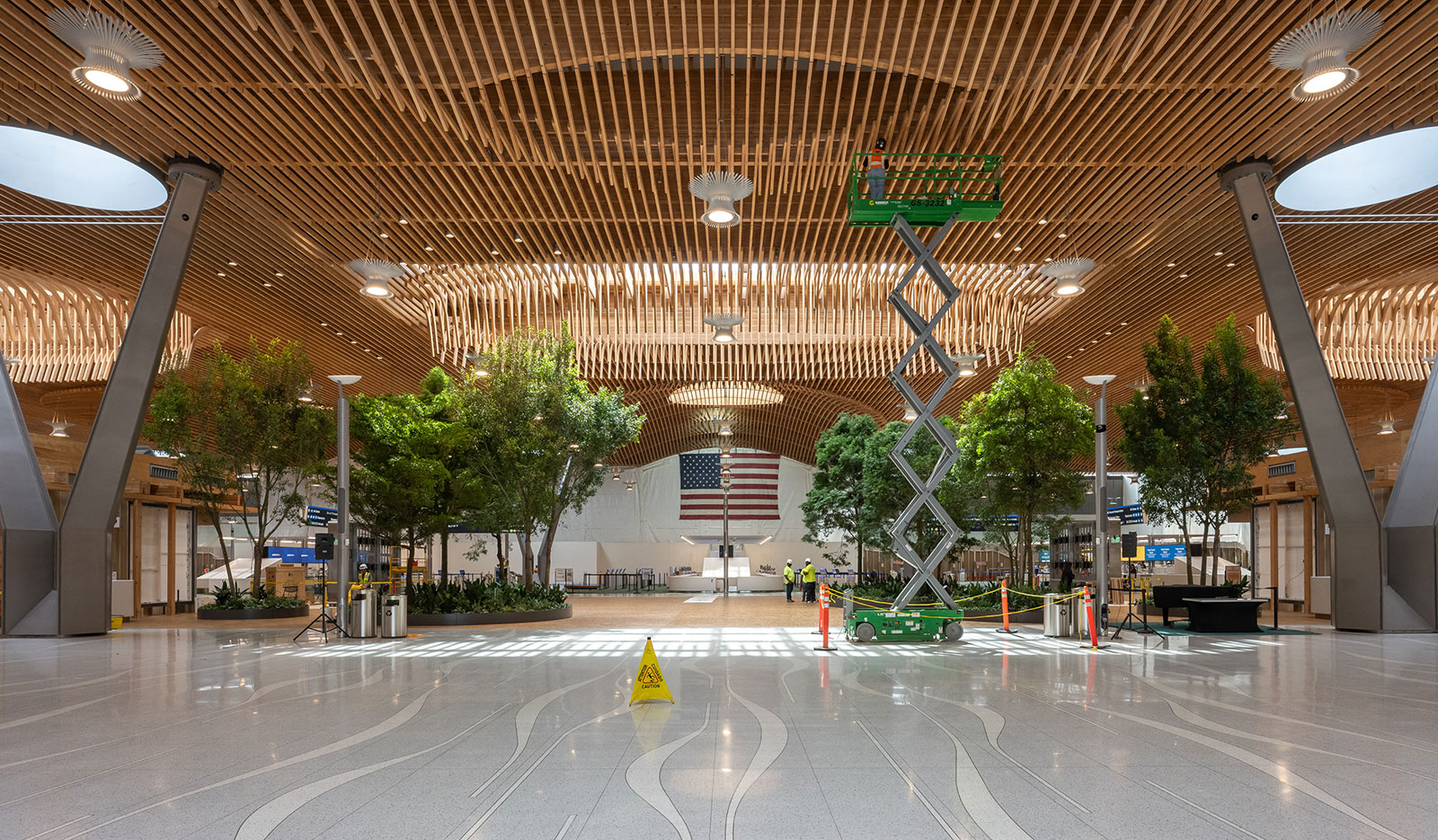
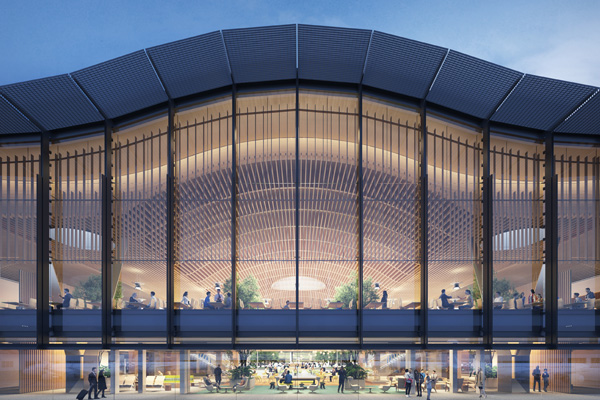
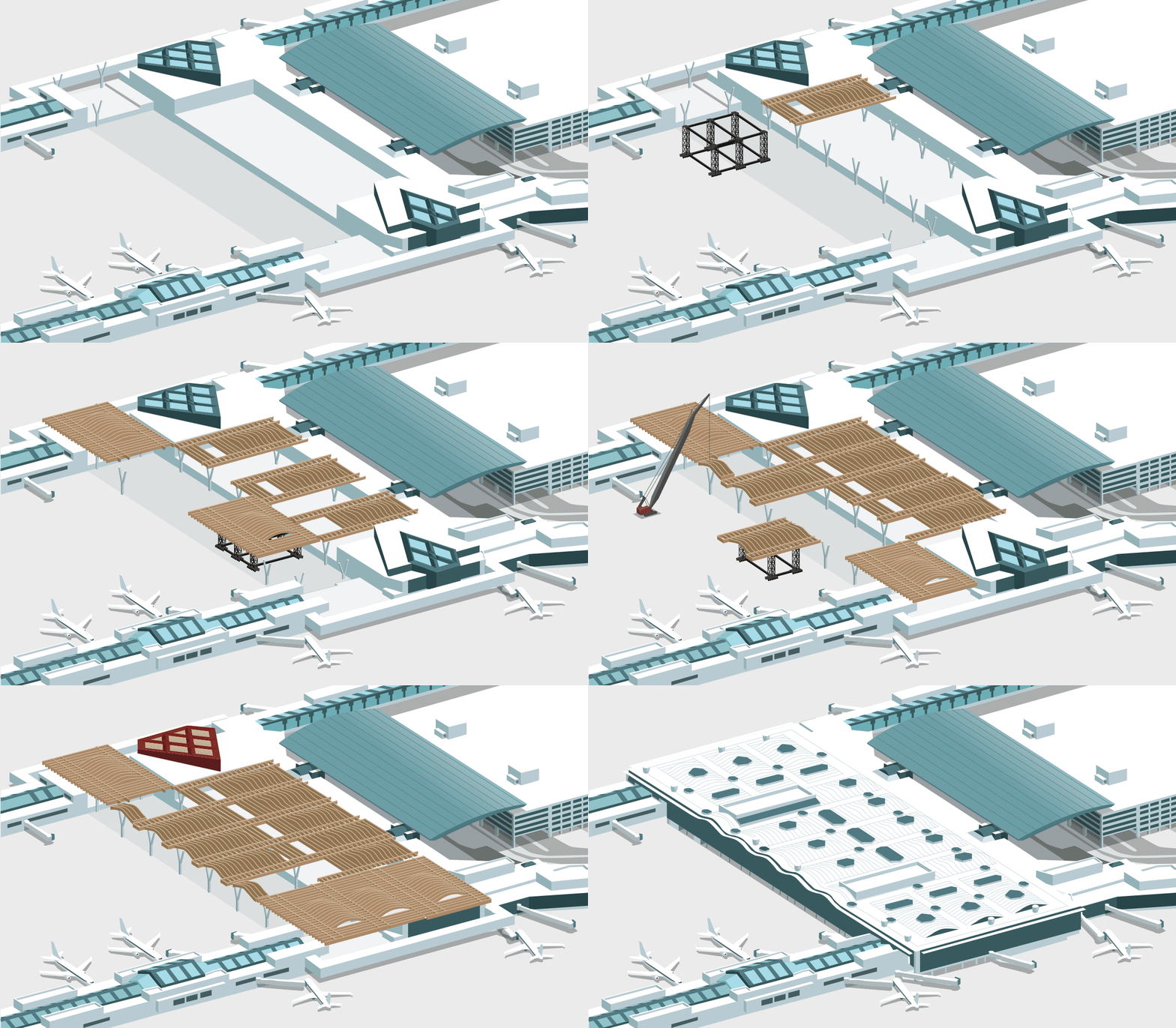
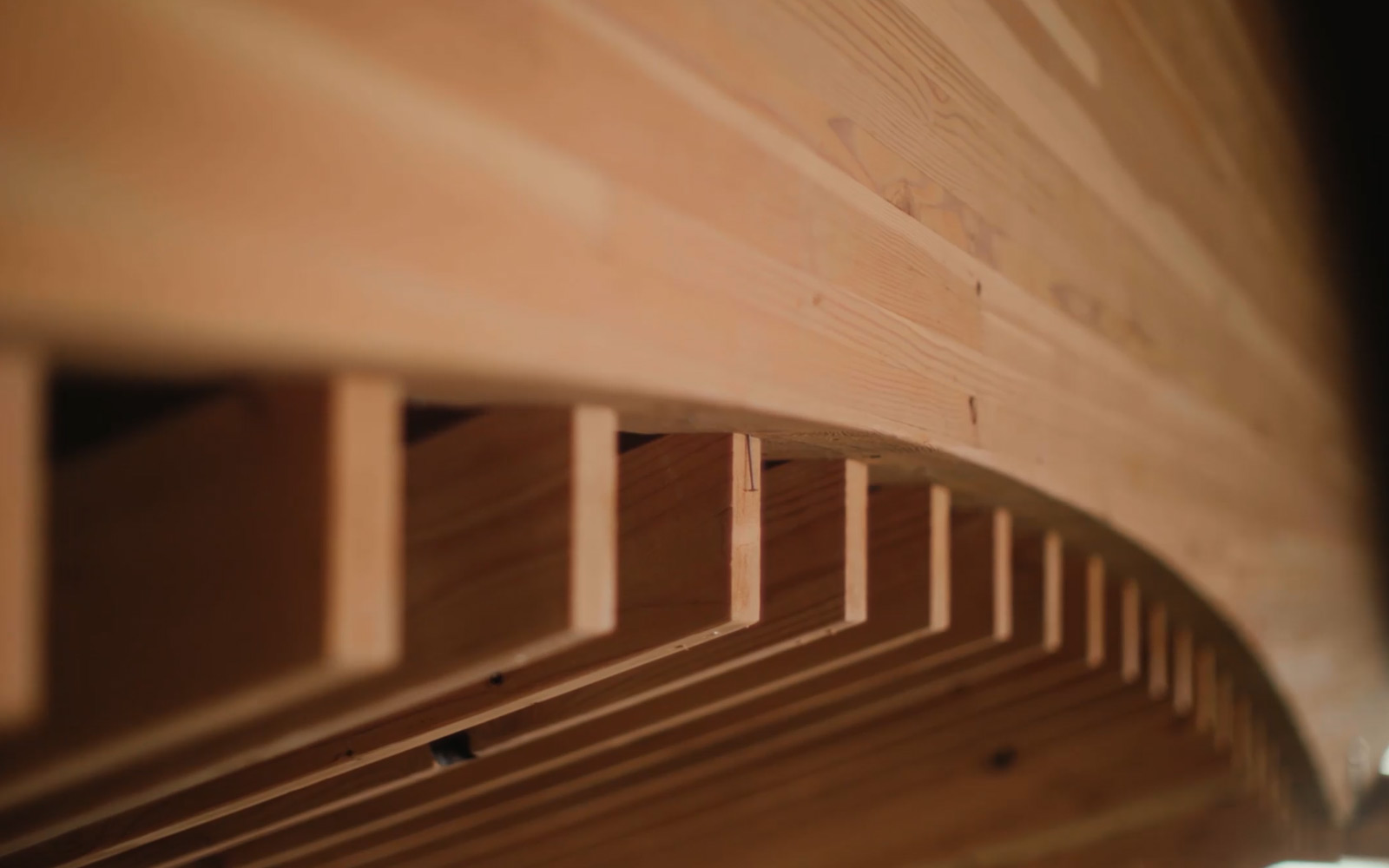
The new terminal’s wooden ceiling, made from sustainably grown, local Doug fir, might remind you of daylight filtering through forest canopies.
This will be your new view when entering the spacious ticket lobby at PDX. The nine-acre wood roof is so distinctive you’ll be able to spot it from the air.
The ripples and currents of pristine Northwest rivers inspired the new terminal’s curvy profile.
Expanding the heart of PDX creates more space for our beloved local shops and restaurants — not to mention local humans (and visitors, too).